The way we build websites has drastically evolved over the past decade. What once required deep coding knowledge, hours of design work, and large teams has now become faster, smarter, and more accessible, thanks to AI website builders. These innovative platforms are redefining the landscape of web design, giving both professionals and beginners the ability to create highly functional, visually compelling websites with minimal manual effort.
AI website builders are not just tools; they are digital collaborators. They help automate repetitive tasks, suggest better user experiences, and even generate content. As businesses and creators look for more efficient ways to establish their digital presence, AI becomes a natural ally.
Table of Contents
1. The Evolution of Website Building: From Code to Clicks
Traditionally, website creation began with handwritten code. HTML, CSS, and JavaScript were the tools of the trade. Over time, platforms like WordPress, Wix, and Squarespace introduced drag-and-drop features, reducing the technical barrier.
Today, we are entering a new phase: intelligent automation. AI website builders are now able to make design decisions, write copy, and personalize the user journey, all based on real-time data and intent.
Key Developments Along the Way:
- Manual Coding Era: Developers had full control but required deep technical expertise to build even simple websites.
- Rise of CMS Platforms: Tools like WordPress made content updates and blog publishing accessible to non-technical users.
- Drag-and-Drop Simplicity: Platforms like Wix and Squarespace introduced visual editing, allowing fast prototyping and design without coding.
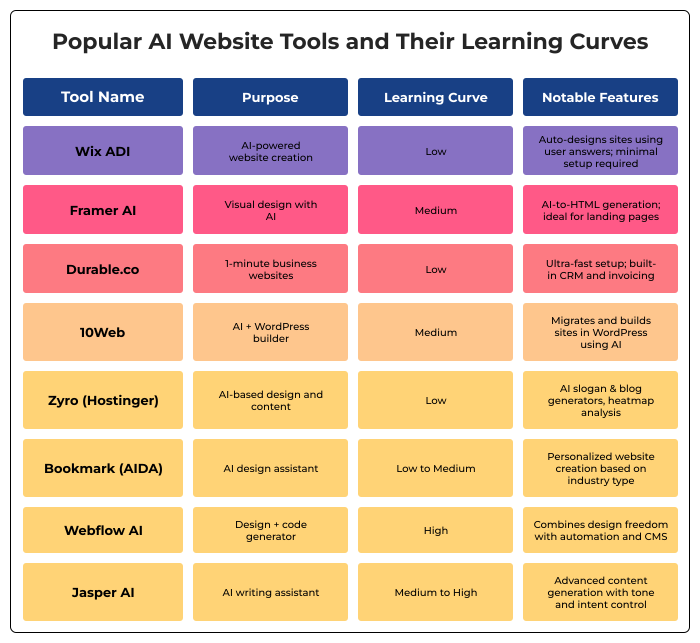
- AI-Driven Builders: Modern tools like Wix ADI and Bookmark use AI to suggest layouts, write content, and optimize UX based on user behavior.
1.1 What are AI Website Builders?
AI website builders use artificial intelligence and machine learning algorithms to simplify and enhance the process of web design. These platforms can analyze user input, suggest layouts, generate content, and even optimize sites for performance and SEO.
Some popular examples include Wix ADI, Bookmark’s AIDA, and Zyro. These platforms are making it easier than ever to get online with a smart, customized site that reflects your brand and goals.
1.2 Why AI is the Next Frontier in Web Development
In a digital-first world, businesses can’t afford to waste time or resources. AI helps by accelerating the design and deployment process. More importantly, it helps deliver smarter, more intuitive websites that engage users better and drive more conversions.
AI also introduces scalability. Whether you’re building one landing page or managing hundreds of product pages, AI tools help ensure consistency, speed, and personalization.
2. The Core Pillars of AI Website Builders Today
AI website builders today are not just smarter, they’re holistic. They address design, content, personalization, and performance. Let’s break down the core pillars that make these tools so powerful.
These platforms leverage machine learning to analyze user behavior, suggest layout improvements, and generate SEO-friendly content automatically. They can adapt to industry-specific needs, streamline A/B testing, and even predict which elements drive conversions. With continuous learning, AI builders evolve alongside your business goals.
2.1 Smarter Design Automation
One of the standout features of AI website builders is their ability to automate design tasks. Based on your business category, audience, and goals, AI can generate a complete website layout in seconds. AI-driven layout and template generation allows the system to suggest page structures that align with industry best practices. Whether you’re creating a portfolio, blog, or eCommerce store, the AI understands which components are essential.
Intelligent color palettes and typography suggestions also play a vital role. The system analyzes brand inputs or user preferences to select visual elements that create a cohesive and visually appealing experience. In some cases, platforms even offer automated image and media curation. Based on the type of website you’re creating, the AI selects stock images or prompts you to upload relevant visuals.
2.2 Enhanced Personalization
Modern consumers expect tailored experiences, and AI delivers. AI website builders collect and interpret user input to craft a personalized design journey. User-centric design is the foundation here. By understanding the purpose of the site and the target audience, AI tools offer design suggestions that resonate with your visitors.
Adaptive content generation is another strength. Headlines, CTAs, and even body text can be dynamically adjusted based on visitor behavior or device type. Dynamic UX optimization ensures that the visitor’s journey is seamless. Whether they arrive via mobile, desktop, or tablet, the AI tweaks the layout and flow to maximize engagement.
2.3 Streamlined Content Creation
Creating engaging content has traditionally been one of the most time-consuming aspects of building a website. AI is now transforming this process by enabling fast, high-quality content generation. From product descriptions to full blog posts, AI-powered tools can craft tailored content based on minimal input. Many website builders also include features that enhance media assets and support multilingual content delivery.
- Automated text generation for headlines, calls-to-action, and page content.
- Smart media suggestions and enhancements for images and videos.
- Multilingual support to easily translate and localize content for global audiences.
- Content personalization based on user behavior and preferences.
3. Beyond the Basics: The Future Landscape
What we see today is only the beginning. AI in web design is on a rapid path toward even more advanced capabilities that extend far beyond layout automation or SEO tweaks. Future tools may analyze user behavior in real-time and adjust design or content instantly. AI could also enable voice-activated website creation, predictive UX adjustments, and deeper integration with AR/VR experiences. The focus will shift toward creating adaptive, user-centric websites that continuously evolve.
3.1 Hyper-Personalization and Adaptive Interfaces
The future of AI website builders lies in real-time personalization. AI will continuously analyze user behavior to adapt content and layout accordingly.
For example, returning users may see different headlines or product recommendations based on past activity. Predictive design will allow the site to anticipate user needs, displaying relevant content before the visitor even clicks.
AI-powered A/B testing is expected to become standard. Instead of running manual split tests, AI will automatically rotate and optimize elements to find the best-performing versions in real time.
3.2 Voice and Conversational UI Integration
Voice search is on the rise, and future website builders will accommodate it natively. Users will soon build websites or navigate through voice commands alone. On-site AI chatbots will also become more intelligent, offering not just customer service but also navigation support, form filling, and more.
This makes the entire web experience more intuitive, especially for users who prefer verbal interaction over clicks and taps.
3.3 Advanced SEO and Marketing Automation
AI won’t just help optimize content, it will proactively manage your marketing. From automatic keyword suggestions to AI-generated content calendars, website builders will act as full-scale marketing assistants.
Expect seamless integration with tools like Google Analytics, Mailchimp, and CRM systems. AI will ensure every piece of content, every landing page, and every email is working toward your business goals.
3.4 Accessibility by Design
Inclusivity is no longer optional, it’s essential. AI website builders are stepping up to ensure accessibility is built in from the ground up, not added as an afterthought. From improving usability for screen readers to making visual content more digestible for all users, AI tools help ensure every visitor can engage with your website equally. These intelligent systems actively monitor design choices and content for compliance with global accessibility standards, saving both time and legal risk.
Key features enhancing accessibility include:
- Smart Color Contrast Checks: Automatically detects and adjusts color combinations for optimal readability.
- Auto-Generated Alt Text: AI describes images for screen readers, improving navigation for visually impaired users.
- Keyboard Navigation Simulation: Ensures users can navigate the entire site without needing a mouse.
- Real-Time Inclusive Design Prompts: Recommends accessible layouts, font sizes, and button placements.
3.5 Integration with Emerging Technologies
AI website builders will soon tap into AR and VR to create immersive browsing experiences. From virtual product try-ons to 3D walkthroughs, the boundaries between digital and physical will blur.
Some builders are exploring blockchain for added security and decentralization. This can enable trustless transactions, identity verification, and even decentralized hosting.
4. Benefits of Embracing AI in Website Building
Adopting AI in your web design workflow doesn’t just save time, it transforms the entire website creation experience. AI empowers both beginners and seasoned developers by simplifying complex tasks and unlocking creative possibilities.
With AI, businesses can quickly launch high-performing, optimized websites that adapt to user behavior in real time. It also reduces dependency on multiple tools by centralizing design, content, and analytics. Most importantly, AI frees up time and mental space so creators can focus on strategy and innovation rather than technical bottlenecks.
4.1 Increased Speed and Efficiency
AI tools can dramatically reduce the time required to design and launch a website. Traditional processes often require days or weeks of planning, layout design, content writing, and revisions. AI website builders automate many of these tasks, enabling users to go live in a fraction of the time. With smart templates, auto-generated text, and image suggestions, you can create a professional-looking website in hours, not days.
4.2 Reduced Costs and Resource Allocation
Hiring developers, designers, and copywriters can be expensive, especially for startups or small businesses. AI website builders offer a cost-effective alternative by reducing the need for extensive human resources. Instead of outsourcing multiple roles, users can rely on AI to handle design and content creation, dramatically lowering overall costs.
4.3 Accessibility for Non-Designers and Non-Coders
Not everyone has a background in coding or design. AI website builders remove that barrier by offering intuitive drag and drop interfaces, auto-generated content blocks, and smart suggestions. Even beginners can build beautiful, functional websites without learning complex skills.
4.4 Enhanced User Engagement and Conversion Rates
By using machine learning to analyze visitor behavior, AI can optimize layouts, content placement, and call-to-actions in real-time. This means websites become more interactive, engaging, and conversion-friendly. Whether it’s tailoring product recommendations or refining landing pages, AI makes constant improvements to keep users engaged.
4.5 Staying Ahead in a Competitive Digital Landscape
In a world where digital presence is critical, AI offers a way to stay competitive. It enables faster iterations, continuous testing, and rapid adaptation to market trends. Businesses leveraging AI can launch updates quicker, test new ideas faster, and fine-tune their websites based on real user data.
5. Challenges and Considerations When Adopting AI for Website Development
While AI website builders offer numerous advantages, it’s important to recognize the challenges that come with their adoption. One of the main concerns is maintaining brand authenticity, over-reliance on AI tools can lead to generic or impersonal designs that lack emotional connection. Additionally, businesses must navigate the learning curve associated with new AI-driven platforms, especially if they’re used to traditional web development methods. Data privacy and security also remain major considerations, as AI systems often rely on user data to function effectively. Lastly, finding the right balance between automation and human creativity is crucial to building a truly impactful online presence.
5.1 Maintaining Human Creativity and Brand Authenticity
AI excels in automation, but it may lack the nuanced creativity and emotional intelligence of human designers. Over-relying on templates or AI-generated content can lead to generic designs that don’t reflect your brand’s unique voice. Striking a balance between AI efficiency and human creativity is essential.
- AI can generate content quickly but may miss subtle brand tone and storytelling.
- Templates can limit originality, making sites feel repetitive or uninspired.
- Creative professionals still play a key role in shaping unique user experiences.
- Use AI as a support tool, not a full replacement for human insight.
5.2 Data Privacy and Security Concerns
AI-powered platforms often collect and analyze user data to enhance performance. This raises legitimate concerns about data privacy, security breaches, and regulatory compliance (such as GDPR). It’s vital to choose AI website builders with strong security protocols and transparent data usage policies.
AI systems often rely on large datasets to deliver personalized content, improve user engagement, and generate insights. However, this data collection must be handled responsibly. Mishandling user information can lead to legal consequences, damage brand reputation, and erode customer trust. As AI becomes more embedded in web design, privacy must remain a top priority.
- Ensure the platform complies with data protection laws like GDPR, CCPA, or HIPAA (where applicable).
- Look for AI builders that offer encryption, secure APIs, and role-based access controls.
- Transparency in data collection and user consent should be clearly communicated.
- Regular security audits and data anonymization features can further reduce risks.
5.3 The Learning Curve for New Technologies
While many AI tools are designed to be intuitive, fully unlocking their potential often requires a deeper understanding of their features. Business owners, marketers, and designers may need to invest time in learning how to use these platforms efficiently. From content prompts and automation settings to SEO configurations and design tuning, there’s a lot to explore.
Moreover, the AI landscape is evolving quickly. New features and updates are released frequently, which can create a constant need to adapt. For teams unfamiliar with tech-driven workflows, this may feel overwhelming at first, but those who embrace learning will gain a significant edge in efficiency and innovation.
5.4 Over-reliance on AI: Potential for Generic Designs
When many businesses rely heavily on the same AI-driven website builders, the resulting websites can begin to feel templated and indistinguishable. AI tools often prioritize speed and efficiency, which can lead to repetitive layouts, similar visual hierarchies, and predictable content structures. This lack of originality can weaken your brand’s online presence and reduce user engagement.
To stand out, it’s important to go beyond what AI offers by default. Incorporate custom graphics, unique typography, personalized messaging, and tailored user experiences. Blend AI-generated efficiency with your brand’s personality and creativity to avoid being just another site that looks like everyone else’s. A website should tell your brand’s story, not just deliver a functional layout.
6. Choosing the Right AI Website Builder: Key Features to Look For
With so many AI-powered platforms available, selecting the right one can be overwhelming. The ideal tool should not only simplify web development but also support your long-term growth and marketing goals. Here are some essential features to evaluate before making your choice:
Intuitive User Interface: Choose a platform that offers a clean, easy-to-navigate dashboard and requires minimal training.
Customization Options and Flexibility: Look for tools that allow you to personalize templates and layouts to fit your brand.
SEO Capabilities: Make sure the platform includes built-in SEO tools like meta tag suggestions, keyword analysis, and sitemap generation.
Integration with Third-Party Tools: Your builder should connect seamlessly with marketing tools, CRMs, and analytics platforms.
Scalability and Support: Whether you’re a small business or a growing brand, the platform should scale with your needs and offer reliable customer support.
7. Frequently Asked Questions (FAQ)
What is an AI website builder, and how is it different from traditional builders?
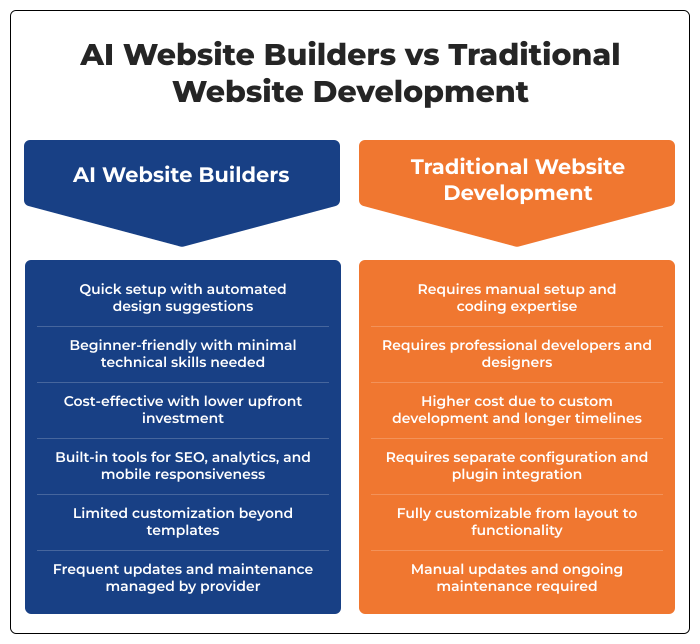
AI website builders automate design, layout, and content creation, unlike traditional tools that require manual setup and customization. They’re significantly faster, smarter, and easier to use.
Are AI website builders suitable for beginners?
Yes. They’re extremely user-friendly and specifically designed for beginners with no prior coding or design experience, making website creation simple and accessible.
Can I customize my site after using an AI builder?
Yes, most platforms offer a wide range of customization options for layout, content, colors, fonts, and branding elements, allowing your website to reflect your unique style and business needs.
Will my AI-built website be SEO-friendly?
Yes. Many AI website builders come equipped with built-in SEO tools like meta tags, alt text, sitemaps, keyword suggestions, and mobile optimization to help improve your site’s visibility on search engines.
Is it safe to use AI for websites and user data?
Yes, most top AI builders follow strict security protocols, including SSL encryption, regular updates, and compliance with global data protection regulations, but it’s important to review each platform’s privacy policy and data handling practices.
8. Conclusion: A Collaborative Future for AI and Web Design
The future of website design isn’t about replacing humans with machines, it’s about collaboration. Artificial intelligence can automate repetitive, time-consuming tasks like layout suggestions, content generation, and image optimization, giving designers, marketers, and entrepreneurs more time to focus on strategy, storytelling, and creating emotionally resonant user experiences. As technology continues to evolve, AI tools will become smarter and more personalized. From predictive design to real-time user behavior analysis, the potential to build dynamic, high-performing websites is growing rapidly. Businesses that embrace AI now are better positioned to stay agile, scale efficiently, and meet the ever-changing expectations of online users.
Importantly, AI should be seen as a co-creator, not the sole creator. Your brand’s voice, values, and personality still matter. The most successful websites will be those that blend the efficiency of AI with the authenticity of human creativity. AI website builders are not just futuristic ideas, they’re the tools businesses are using today to build faster, smarter, and more adaptable web experiences. Whether you’re launching a startup or revamping an established brand, AI can help streamline your workflow and elevate your digital presence.
Check Out our latest blog on “How to Save 20+ Hours/Week with Looker Automations”