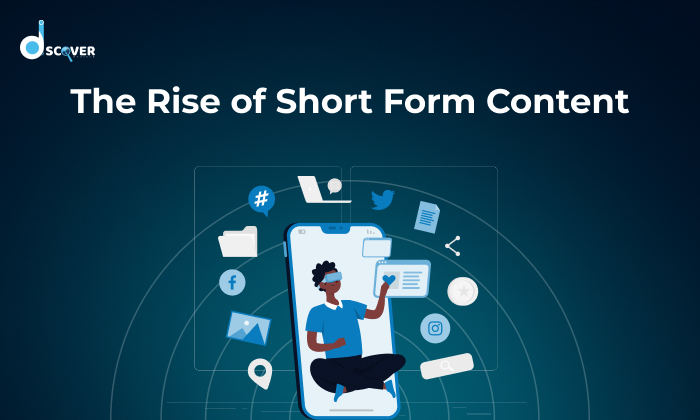
At Discover WebTech, we’ve seen a massive shift in how digital content performs—and it’s clear: audiences today crave speed, relevance, and bite-sized value. As attention spans shrink, short form content has taken center stage in content marketing.
In this blog, we’re diving deep into what is short form content, how it compares to longer formats, real short form content examples, the various types of short form content, and how our team leverages them for brand growth.
What Is Short Form Content?
Let’s start with the basics. What is short form content?
According to a Digital Marketing Expert, it’s any form of digital content that is concise, easy to consume, and often under 1,000 words or 60 seconds in length. Think Reels, tweets, short blog posts, or infographics.
At Discover WebTech, we use it when we want to communicate quickly and effectively—whether it’s through a punchy Instagram caption or a 30-second video update. The key is clarity, impact, and speed.
The Rise of Short Form Content in Digital Marketing
We’ve watched the digital marketing space transform with the rise of platforms like TikTok, YouTube Shorts, and Instagram Reels. These platforms prioritize snappy, scroll-stopping formats that grab attention instantly—and our team has adopted them with great results.
Here’s why this trend matters:
- Short videos drive high ROI: Our campaigns with short-form video consistently deliver excellent engagement rates
- Platforms love it: Instagram Reels and YouTube Shorts now dominate our social strategy
- It’s mobile-first: Short form content is ideal for users on the go—which is nearly everyone today
Our team members track how well short videos perform compared to longer formats, and we’ve noticed a significant uptick in engagement and shares when we keep it short and focused.
Short Form vs Long Form Content: Which One Should You Use?
We often get asked: short form vs long form content—which one is better?
Here’s our answer: it depends on the goal. Our team uses both formats strategically:
- We use short form content for brand awareness, quick product highlights, or social media campaigns
- We use long form content like blog articles, detailed guides, and whitepapers when we want to educate, build trust, or improve SEO rankings
To break it down:
- Short form = faster to create, easier to consume, highly shareable
- Long form = better for deep storytelling, search visibility, and lead generation
Instead of choosing one over the other, we integrate both to support the customer journey at every stage.
Types of Short Form Content
Let’s look at the different types of short form content our team regularly creates:
- Social media posts – Quick updates on LinkedIn, witty tweets, and visually-rich Instagram captions
- Short-form videos – Reels, TikToks, and Shorts are part of our regular content production
- Stories – We use Instagram and Facebook Stories to engage audiences with behind-the-scenes updates
- GIFs and memes – Perfect for making content fun and relatable
- Infographics and microblogs – For explaining complex topics quickly
- Carousel posts – Great for delivering information in a swipeable, engaging format
These formats allow our team to communicate clearly and creatively without overwhelming the audience.
Short Form Content Examples That Work
We believe real examples help illustrate the power of short form content. Here are a few short form content examples we’ve either studied or created ourselves:
- Nike’s Reels and TikToks: Powerful product highlights in under 30 seconds
- Zomato’s memes: Perfect examples of brand personality and relatability
- Duolingo’s TikToks: Humorous, consistent, and insanely shareable
- Our own reels: When we showcase website transformations or SEO results in under 45 seconds, the reach often doubles compared to regular posts
These short form content examples show how creativity + brevity = massive engagement.
How We Leverage Short Form Content at Discover WebTech
Our team members at Discover WebTech are constantly refining how we use short form content across channels. Here’s how we make the most of it:
- Goal alignment: We match content length with the campaign objective
- Platform-first design: We create vertical videos for mobile, use snappy intros, and make sure visuals pop
- Performance tracking: Engagement rates, watch time, and shares tell us what’s working
- Content repurposing: We often convert long blogs into micro-snippets, infographics, or reels
- Trend adoption: Our team keeps an eye on trending audio, hashtags, and formats
- Budget allocation: We even run short-form ads with great success, especially for awareness campaigns
This approach ensures we don’t just follow trends—we lead with purpose.
How Short Form Content Fits Into a Full Funnel Strategy
At Discover WebTech, we don’t treat content in isolation. We always look at how each piece of content supports the bigger picture—especially when it comes to customer journeys.
Short form content plays a crucial role at the top and middle of the funnel:
- Top of Funnel (Awareness): We use engaging Reels, tweets, and short blog snippets to introduce a topic or brand to a new audience
- Middle of Funnel (Consideration): We create infographics, FAQs, and short case study videos to nurture leads and answer common questions
Later in the funnel, when a prospect needs more detailed information, that’s when we introduce long form content like whitepapers, landing pages, and in-depth blog guides.
Our Most Successful Short Form Content Campaigns
Campaign 1: Instagram Reels for Local SEO Awareness
We launched a series of 30-second Reels educating small business owners on Google Business Profile optimization. The results? 300% increase in engagement and 40+ leads in 10 days.
Campaign 2: LinkedIn Carousel on SEO Mistakes
We turned a blog post into a carousel series with actionable tips. It got 2.5x more profile visits and 200+ saves in less than a week.
These campaigns proved that even short, focused content can lead to serious results.
Common Mistakes to Avoid
Here are a few things our team has learned to avoid when working with short form content:
- Trying to cover too much in one piece
- Forgetting to include branding or CTAs
- Ignoring analytics and engagement feedback
- Publishing without optimizing for each platform
Avoiding these mistakes has helped us keep our short content clean, useful, and on-brand.
How We Plan Our Short Form Content Calendar
Our workflow for planning types of short form content includes:
- Weekly content themes
- Content format variety (videos, carousels, memes)
- Clear objectives per post (engagement, click, share)
- Bi-weekly performance reviews and tweaks
This system helps us stay creative without sacrificing consistency.
Final Thoughts
At Discover WebTech, we’ve witnessed firsthand how short form content reshapes marketing strategies. It’s not just about keeping things “short and sweet”—it’s about delivering value quickly, grabbing attention in busy feeds, and staying relevant.
To summarize:
- What is short form content? It’s quick, impactful, and everywhere
- Short form vs long form content? Both are essential—use each strategically
- Use different types of short form content to match your message and platform
- Learn from top-performing short form content examples, and adapt them to your brand voice
Start small. Repurpose one blog into a 30-second reel or a mini-carousel. Publish it. Track it. Then build from there.
Short form is the future—and we’re excited to help businesses like yours master it.
Check out our latest blog on “The Power of Dashboards in Business Intelligence (BI)”