1. Introduction: The Rise of Zero-Click Searches
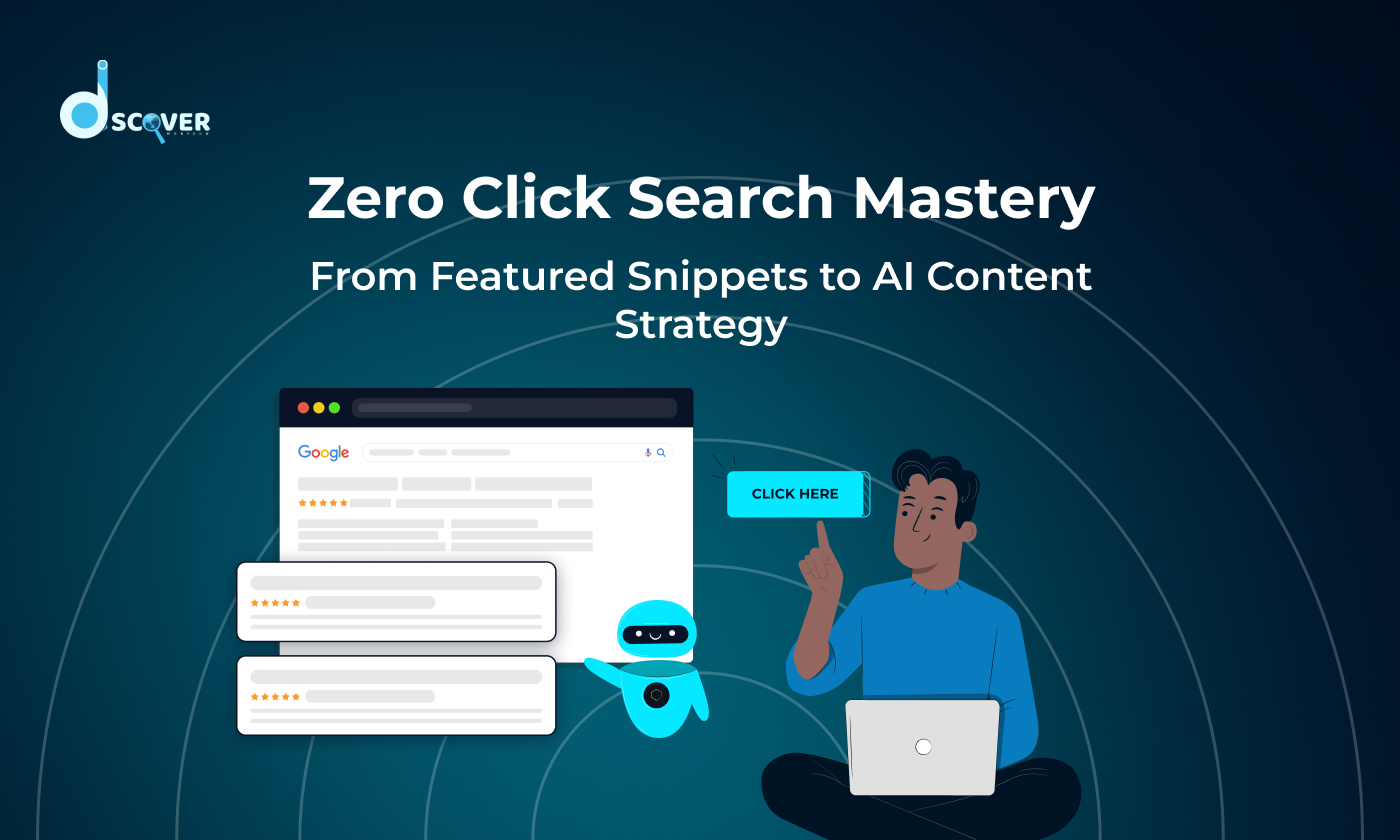
Search engines are no longer just places where people type in a query, click on a link, and visit a website. Today, more and more searches end right on the search results page itself without the user ever clicking through. These are called zero-click searches, and they’re reshaping the way we think about SEO.
Whether it’s a quick definition, a featured snippet, a knowledge panel, or even an AI-generated overview, Google and other search engines are serving up answers directly. For users, it’s fast and convenient. For brands and marketers, however, it presents both a challenge and an opportunity.
The challenge lies in reduced website traffic. Even if your content ranks high, the user might never land on your site. But the opportunity is in visibility, your brand can still dominate the results page, build trust, and position itself as an authority.
Now, we’ll explore how zero-click searches have evolved from simple snippets to AI-driven answers, and how you can build a winning content strategy to thrive in this new era of search.
Table of Contents
2. The Evolution of Search: From Snippets to AI Overviews
Search has come a long way from the days when users had to scroll through multiple results to find answers. Over the past decade, Google and other search engines have introduced new features that aim to give people information instantly. What started as simple featured snippets has now grown into a complex ecosystem of knowledge panels, People Also Ask boxes, and AI-powered overviews. Together, these innovations are shaping a future where users expect quick, direct, and reliable answers without extra clicks.
2.1 Featured snippets, knowledge panels, and People Also Ask
Featured snippets were the first major step toward zero-click searches. These boxes pull short, precise answers from a webpage and display them at the very top of search results. For example, if someone searches “how to boil pasta,” they’ll likely see a short set of steps directly in a snippet without clicking through.
Knowledge panels further expand visibility by showcasing information about a person, brand, or topic in a structured way, often pulled from authoritative sources like Wikipedia or Google’s Knowledge Graph. If you search for “Apple Inc.” or “Eiffel Tower,” the right-hand panel gives quick details like founding date, location, and key facts.
Then came the People Also Ask (PAA) boxes, which provide related questions and answers. For instance, a search for “best skincare routine” might trigger PAAs like “What is the correct order of skincare?” or “How many steps should a skincare routine have?” For businesses, PAA offers a chance to appear multiple times in search results, increasing exposure and authority. Together, these features made the search experience faster, but they also reduced the number of clicks going to websites.
2.2 How AI-powered search is changing user behavior
The newest evolution is AI-powered search overviews. Google and other platforms now use AI to generate summarized answers that combine insights from multiple sources. Instead of showing just one snippet, AI pulls together a mini report, often with citations, giving users a detailed response right on the results page.
For example, if someone searches “Is a plant-based diet good for heart health?” The AI overview may generate a short summary combining insights from medical websites, research studies, and trusted health blogs all without requiring the user to click any of them.
This shift is changing how people interact with search. Users no longer need to compare multiple links, they get their answers in one place. As a result, browsing behavior is becoming shorter and more direct. For brands, this means the focus can’t just be on driving clicks anymore. Instead, the goal is to be included in AI summaries, so your brand remains visible even when users don’t leave the search page.
3. Optimizing for Featured Snippets and Quick Answers
Featured snippets and quick answers are some of the most valuable placements on Google’s search results page. They sit right at the top, often above organic listings, making them highly visible and more likely to grab user attention. Ranking here not only boosts visibility but also builds authority by showing that Google trusts your content enough to use it as a direct answer.
In many cases, users don’t scroll past the snippet, which means appearing here can put your brand in front of thousands of searchers instantly. Even if it doesn’t always bring a direct click, it strengthens brand recognition and positions your content as the go-to solution in your niche. Optimizing for snippets has become one of the smartest ways to win visibility in a zero-click search world.
3.1 Types of snippets and how to rank for them
Not all featured snippets look the same. Google tailors them based on the kind of question a user asks, which means understanding the different snippet types is key to optimizing your content. By aligning your answers with the format Google prefers, you increase your chances of winning that top position and capturing user attention instantly.
Google uses different snippet formats depending on the type of query. The main ones include:
- Paragraph snippets: Short text answers that explain a definition or concept. Example: “What is SEO?” will usually trigger a 40–60 word explanation.
- List snippets: Step-by-step answers, like recipes or “how-to” guides. Example: “Steps to change a flat tire.”
- Table snippets: Comparisons or structured data such as pricing, schedules, or statistics. Example: “Nutritional value of apples vs bananas.”
- Video snippets: Clips, often from YouTube, that answer a query directly. Example: “How to tie a tie.”
To rank for these, your content should directly answer common questions in a clear, concise format. Aim for 40–60 word answers for definitions, bullet points for steps, and well-formatted tables for data. Using simple language and clear formatting increases your chances of being pulled into a snippet.
3.2 Structuring content for instant visibility
The way you structure your content plays a huge role in snippet optimization. Search engines prefer content that is easy to scan and well-organized. Here are some proven tactics:
- Use clear headings (H2, H3) for each question or subtopic.
- Answer questions directly right after the heading. For example, if your H2 is “What is content marketing?”, start with a simple, one-sentence answer before expanding.
- Break information into lists and bullet points where possible.
- Include schema markup (like FAQ or HowTo) to help Google better understand your content.
- Keep answers concise and specific, avoiding unnecessary fluff.
For example, if you’re writing about “benefits of SEO”, you could structure it with a heading, a one-line summary like “SEO improves website visibility, drives organic traffic, and builds long-term brand authority”, followed by a bullet-point breakdown of each benefit. This approach makes it easier for Google to lift your content directly into a featured snippet.
Understanding why traffic drops often happen silently is key when adapting your strategy for zero-click searches. As explained in Zero Click Search Drops, many websites lose visibility without realizing it, making it essential to refine both your featured snippet and AI-driven optimization efforts.
4. Voice Search and Conversational Queries in Zero-Click SEO
Voice search has transformed the way people interact with technology. Instead of typing short keywords, users now speak full questions into devices like smartphones, smart speakers, and voice assistants. This shift means search queries are longer, more conversational, and often focused on quick, direct answers. For businesses, optimizing content for voice search is becoming essential in staying visible in the zero-click world.
4.1 How voice assistants deliver results
Voice assistants like Google Assistant, Siri, and Alexa aim to give users the fastest and most relevant response possible. Instead of offering a list of websites, they typically read out one clear answer, often pulled from a featured snippet or a trusted source.
For example, if someone asks, “What is local SEO?” Google Assistant might read a short definition directly from a top-ranking site. This means only one brand usually gets mentioned, making it crucial to structure your content in a way that aligns with voice search patterns.
Most voice queries are:
- Conversational (e.g., “What’s the best way to improve website speed?”)
- Local-based (e.g., “Where’s the nearest coffee shop?”)
- Question-focused (e.g., “How long does it take to rank on Google?”)
Understanding these patterns helps you tailor your content to match the natural way people speak.
4.2 Crafting conversational, answer-ready content
To appear in voice search results, your content should be easy for search engines to pick up and deliver as a spoken response. This means writing in a conversational tone and structuring your answers clearly.
Here are some effective strategies:
- Use question-based headings: Format sections as “What is…”, “How to…”, or “Why does…” so Google knows your content directly addresses a query.
- Provide concise answers: Aim for 25–30 word responses that could be read aloud easily by an assistant.
- Add FAQs: An FAQ section with natural questions and answers improves your chances of being pulled into voice results.
- Optimize for local intent: If you run a business, include details like “near me” searches, opening hours, and location-based keywords.
- Keep it natural: Avoid overly technical jargon and write as if you’re explaining something to a friend.
For example, if you’re writing an article about “SEO basics”, you might add an FAQ:
Q: How does SEO help a website?
A: SEO helps a website rank higher on search engines, attract more organic traffic, and build long-term credibility with users.
5. AI Content Strategy: Thriving in the New Search Era
Artificial Intelligence is changing the way people search and consume information online. Instead of clicking through multiple pages, users now get instant summaries, recommendations, and direct answers powered by AI. To stay visible in this new search era, your strategy must go beyond traditional SEO and embrace AI-driven optimization. This means creating content that is concise, context-rich, and structured for quick answers. Brands that adapt to AI’s way of filtering and presenting information will have a stronger chance of staying ahead in the competition.
5.1 How AI summarizes and displays content
AI in search engines like Google’s AI Overviews and Bing Copilot is changing the way people find information. Instead of only showing a list of links, AI now generates short, direct answers. This makes it easier for users to get what they need instantly, but it also means websites must adapt if they want to be featured in those summaries.
To build these overviews, AI scans multiple sources, identifies the most relevant points, and combines them into a single, easy-to-read response. It often pulls definitions, lists, examples, or key statistics and presents them in a conversational way. Content that is well-structured, clear, and broken into logical sections stands a better chance of being selected.
For businesses and creators, this shift highlights the importance of writing in an answer-ready style. Concise explanations, natural keyword use, and formatting that’s easy to follow increase the likelihood of being included in AI-generated results. The new goal is not just ranking high in search but becoming the source that AI chooses to summarize and highlight.
5.2 Blending SEO with AI-focused optimization
Traditional SEO still matters. Keywords, backlinks, and technical health are essential, but they’re no longer enough on their own. To thrive in AI-driven search, content must be optimized for clarity, context, and user intent. Search engines are now prioritizing relevance and helpfulness over keyword stuffing. Creating content that speaks directly to users, answers their questions, and provides genuine value is the key to standing out in this new landscape.
- Combine SEO basics with AI-readiness: Use targeted keywords, but also write in a conversational style that mimics how users speak.
- Optimize for context, not just keywords: AI looks at intent, so create content that addresses “why” and “how,” not only “what.”
- Leverage structured data (schema markup): This helps AI understand your content’s meaning and context, making it easier to include in summaries.
- Focus on user value: AI highlights content that’s most useful, accurate, and easy to digest.
In short, SEO is evolving from just ranking on Google to being chosen by AI as the best possible answer. If your content blends authority, clarity, and user-focused value, you’ll remain highly visible, even in a zero-click world.
6. Measuring Success Beyond Clicks: Metrics That Matter
In the age of AI-driven search, clicks alone are no longer the best measure of success. Users often get their answers directly from summaries, which means your content might influence decisions without generating a traditional click. To stay relevant, you need to track visibility, authority, and engagement in new ways that reflect how AI presents your brand. By shifting your focus, you gain a clearer view of the real value your content brings. This ensures you don’t underestimate your digital impact just because clicks look lower.
| Traditional SEO Metrics | AI-Era SEO Metrics |
| Click-through rate (CTR) | Search impressions & visibility |
| Pageviews | Mentions in AI answers & summaries |
| Bounce rate | Content authority & trust signals |
| Conversions | Engagement without clicks (brand recall, awareness) |
6.1 Tracking impressions, visibility, and authority
Instead of only focusing on traffic numbers, it’s crucial to measure how often your content appears in AI summaries, featured snippets, and knowledge panels. High impressions mean your content is being noticed, even if users don’t click through. Authority signals like brand mentions, citations, and backlinks remain important because AI systems rely heavily on trusted sources when generating responses. Beyond this, look at your share of voice compared to competitors, as it reveals whether your brand is gaining ground in visibility. Consistent growth here shows that you’re building lasting authority in your niche.
6.2 Tools to measure performance in a zero-click world
To thrive in a world where clicks are fewer, you need tools that go beyond standard analytics. Platforms like Google Search Console can show impressions, average ranking, and visibility across different queries. AI-focused SEO tools can track how often your content is used in summaries or voice search results. Social listening tools also provide insights into brand mentions, authority, and reach. Combining these with AI monitoring platforms helps you see how algorithms surface your content in evolving search landscapes. The goal is to understand influence, not just traffic, and refine your strategy accordingly.
7. Future-Proofing Your SEO: Strategies for Long-Term Growth
AI-driven search is not a temporary shift – it’s the future of how people will discover and consume information. To stay relevant, businesses need to think long-term and adapt their SEO strategies to align with changing user behavior and search technology. The focus should move from only chasing rankings to building a strong, adaptable online presence.
This means creating content that provides real value, developing authority in your niche, and ensuring your brand is trusted across multiple platforms. The businesses that stay agile, embrace innovation, and prioritize user experience will be the ones that thrive in this evolving digital landscape.
7.1 Predictions for AI-driven search evolution
AI-powered search will keep getting smarter, moving from just answering questions to predicting what users need before they even ask. Personalized search results, voice-driven queries, and interactive answers will dominate. This means websites that provide structured, clear, and helpful content will have the edge. The more “human-friendly” your content feels, the better AI can interpret and present it. Adding context, intent-based keywords, and conversational tone will make your content future-ready.
In the coming years, search engines will prioritize trust signals like expertise, author credibility, and user engagement over just keyword density. Businesses that adapt early will stand out while those sticking to old methods risk becoming invisible in AI-driven search.
7.2 Building brand visibility and trust beyond clicks
In an era where zero-click results are common, your brand visibility should not depend only on clicks. Instead, focus on building trust and recognition wherever your content appears. If your brand becomes the name users repeatedly see in answers, snippets, and AI summaries, you win authority, even without a direct click. This can be achieved through consistent content quality, strong brand storytelling, social proof, and thought leadership. Over time, users start trusting your brand, which drives loyalty, conversions, and long-term growth.
Strategies for Future-Proof SEO
| Strategy | Why It Matters | How to Implement |
| Conversational Content | Matches voice and AI-driven queries | Write in a natural, answer-ready tone |
| Structured Data | Helps AI understand content better | Add schema markup for articles, FAQs, products |
| Brand Authority | Builds trust beyond clicks | Share expertise through blogs, social, and PR |
| User Experience | Keeps visitors engaged | Focus on fast, mobile-friendly, and accessible design |
| Content Diversity | Meets different user needs | Use blogs, videos, podcasts, and infographics |
8. Conclusion: Mastering Zero-Click for Long-Term Success
Zero-click search isn’t the end of SEO, it’s the evolution of it. As AI-driven search continues to shape how people access information, the real winners will be the businesses that adapt early. Instead of focusing only on clicks, the priority should be visibility, authority, and trust. When your content answers questions directly, positions your brand as a credible source, and provides real value, you’ll benefit even if users don’t always land on your website.
Mastering zero-click SEO means balancing short-term tactics like featured snippets and People Also Ask optimization with long-term strategies like brand building, structured data, and future-ready content. Businesses that invest now will not just survive in the AI-first search world, they will thrive in it.
To stay ahead, keep testing new formats, embrace conversational content, and align your strategy with how real people search. Remember, SEO is no longer just about rankings, it’s about being the trusted voice that search engines rely on to deliver answers.
Check out our latest blog on – “AI Content Detection Tool vs Manual Review: What Actually Works in 2025 ?”