Introduction
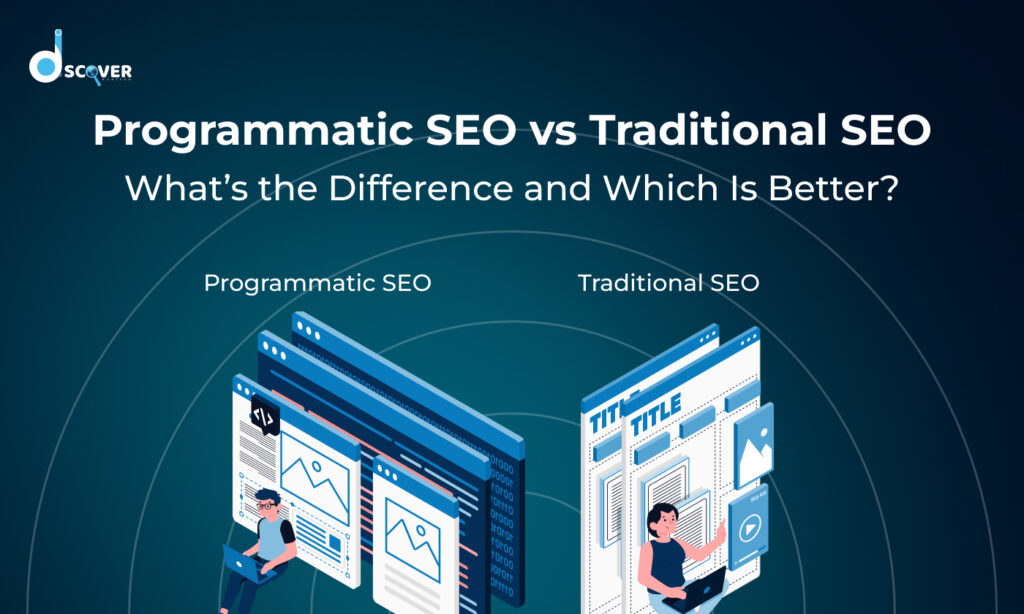
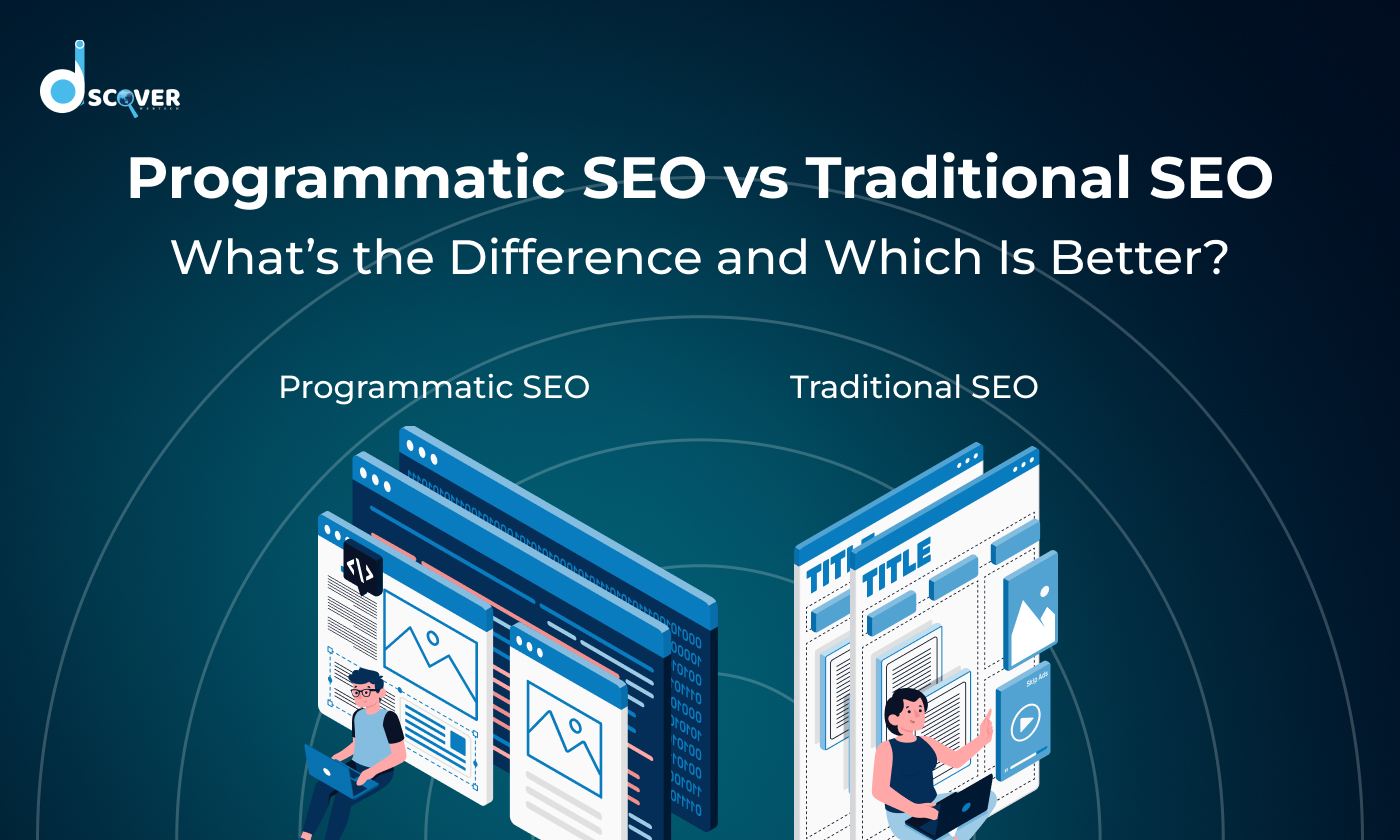
Search Engine Optimization (SEO) has always been the backbone of digital marketing. But in today’s fast-changing online world, the way businesses use SEO is evolving. Traditionally, SEO has focused on carefully researching keywords, creating high-quality content, and building links to boost rankings. Now, a newer approach called Programmatic SEO is making its mark by using automation and technology to scale content faster and more efficiently.
Both strategies aim to increase visibility and bring more traffic to websites, but they work in very different ways. While traditional SEO is detailed, human-driven, and tailored for long-term growth, programmatic SEO leverages data and automation to create hundreds or even thousands of optimized pages quickly.
Table of Contents
1. Understanding the Basics of SEO
Before diving into comparisons, it’s important to clearly understand what Traditional SEO and Programmatic SEO mean. Both share the same end goal: improving a website’s visibility in search engines, but the way they achieve it is very different.
Traditional SEO focuses more on quality, creativity, and manual optimization, while programmatic SEO relies on scale, automation, and data-driven strategies. Knowing the basics of each will help you see why businesses choose one over the other, or even combine both for maximum results.
1.1 What Is Traditional SEO?
Traditional SEO is the classic method of optimizing a website to rank higher on search engines like Google. It involves:
- Keyword Research – Finding the right search terms people use.
- Content Creation – Writing articles, blogs, and landing pages tailored to those keywords.
- On-Page Optimization – Improving titles, meta descriptions, headers, and internal links.
- Link Building – Gaining quality backlinks to boost authority.
This approach is highly manual, human-driven, and creative. Each page is carefully crafted with unique content, which makes it great for building strong brand authority and trust. However, it can take time, effort, and consistent updates to maintain rankings.
1.2 What Is Programmatic SEO?
Programmatic SEO is a more data-driven and automated approach. Instead of manually creating content for each keyword, programmatic SEO uses templates and automation to generate hundreds or thousands of landing pages at scale.
For example, a travel website might use programmatic SEO to create city-specific pages like “Best Hotels in Paris”, “Best Hotels in Rome”, and “Best Hotels in New York”—all built from a single template but customized with relevant data.
Key elements of programmatic SEO include:
- Automation Tools – Using software and scripts to scale content creation.
- Dynamic Templates – Designing flexible layouts that can adapt to multiple keywords.
- Data Integration – Pulling data (like product info, location details, or reviews) to fill in the content.
This method is powerful for businesses that need to cover a wide range of keywords quickly. However, it requires strong technical expertise and high-quality data to avoid thin or duplicate content.
Traditional SEO vs Programmatic SEO
| Feature / Aspect | Traditional SEO | Programmatic SEO |
| Approach | Manual, human-driven, creative optimization | Automated, data-driven, scalable optimization |
| Content Creation | Unique articles and pages written individually | Template-based pages generated in bulk |
| Scalability | Limited – requires time and effort for each page | High – can produce hundreds/thousands of pages quickly |
| Best For | Building authority, brand trust, and long-term results | Covering large sets of keywords (locations, products, categories) |
| Speed of Execution | Slower, as content is crafted manually | Faster, with automation and bulk generation |
| Technical Requirements | Basic SEO knowledge, content writing skills | Strong technical setup, automation tools, and quality data |
| Risk Factors | Time-consuming and resource-heavy | Risk of thin or duplicate content if not executed well |
2. How Traditional SEO Works in Practice
Traditional SEO is a step-by-step process that focuses on improving a website’s visibility using proven and time-tested strategies. It’s more hands-on and requires continuous effort, but when done right, it can deliver strong and sustainable results. This approach is built on a foundation of research, creativity, and consistent optimization, making it ideal for long-term growth. While results may take time, the impact of traditional SEO is often more stable and lasting compared to quick, short-term tactics.
2.1 Keyword Research and Targeting
The foundation of traditional SEO is keyword research. This involves identifying the exact search terms your audience uses when looking for products, services, or information. Tools like Google Keyword Planner, SEMrush, or Ahrefs are often used to find keywords with the right balance of search volume and competition.
The goal is to target keywords that match user intent, whether informational, navigational, or transactional, so your content reaches the right audience at the right time.
2.2 Content Creation and Optimization
Once the keywords are identified, the next step is creating high-quality content around them. Traditional SEO emphasizes unique, valuable, and engaging content that answers users’ questions and provides real solutions.
On-page optimization also plays a big role here. This includes:
- Using keywords in titles, headings, and meta descriptions
- Optimizing images with alt text
- Improving page speed and mobile friendliness
- Ensuring proper internal linking
Well-optimized content not only ranks better but also builds trust and keeps visitors engaged.
2.3 Link Building and Authority Growth
Links are like votes of confidence for your website. In traditional SEO, building backlinks from reputable and relevant websites helps boost domain authority and credibility. This can be achieved through guest posting, outreach, partnerships, and creating content that naturally attracts links (such as infographics, case studies, or in-depth guides).
The stronger your backlink profile, the more search engines see your site as authoritative, which increases the chances of ranking higher in competitive searches.
3. How Programmatic SEO Works in Practice
Programmatic SEO takes a different route compared to the traditional approach. Instead of manually creating and optimizing each page, it uses automation, data, and templates to scale content creation. This makes it possible for businesses to target thousands of keywords and search queries in a shorter time.
3.1 Automation and Technology in SEO
The backbone of programmatic SEO is automation. With the help of scripts, APIs, and specialized tools, websites can automatically generate optimized pages. This reduces manual work and allows marketers to focus on improving quality and structure rather than starting from scratch each time. For example, e-commerce sites can automate product or category pages, while travel sites can generate city or destination-specific pages with minimal effort.
3.2 Creating Scalable Content Pages
One of the biggest strengths of programmatic SEO is its scalability. By using predefined templates, businesses can produce hundreds or even thousands of landing pages quickly. These pages often follow a consistent format but are customized with dynamic elements such as location names, product details, or service features. This strategy is especially useful for industries with large inventories or multiple service areas, where creating content manually for each variation would be unrealistic.
3.3 Role of Data and Templates
Data is at the core of programmatic SEO. Structured data, such as product information, pricing, customer reviews, or geographical details, feeds into templates to generate relevant and search-friendly pages. Templates ensure a uniform design and layout, while data fills in the unique details for each page. When executed well, this combination helps achieve broad keyword coverage and boosts visibility across many search queries.
4. Key Differences Between Traditional SEO and Programmatic SEO
While both traditional and programmatic SEO aim to improve visibility in search engines, the way they operate is very different. Understanding these differences helps businesses choose the right strategy based on their goals, resources, and timelines. Each approach comes with its own strengths and challenges, which means there’s no one-size-fits-all solution. By looking at factors like content creation, scalability, and costs, it becomes easier to see which method aligns best with your business objectives.
4.1 Approach to Content Creation
Traditional SEO is highly manual and creative. Each page is written individually with unique content, tailored to specific keywords and audiences. This allows for a personal touch, in-depth explanations, and storytelling that connects with readers.
Programmatic SEO, on the other hand, takes a data-driven and automated approach. It uses templates combined with structured data to generate multiple pages at once. Instead of writing content for each keyword, businesses can scale quickly by filling templates with dynamic elements such as product names, city names, or category details.
4.2 Speed and Scalability
In traditional SEO, progress is often slower but steady. Creating and optimizing content for each keyword takes time, which limits how fast a business can expand its keyword coverage. It’s well-suited for companies focusing on quality and brand-building.
Programmatic SEO excels in speed and scale. With automation, it can produce hundreds or even thousands of pages in a fraction of the time. This makes it ideal for large websites like e-commerce stores, travel platforms, or directories that need broad coverage across many variations.
4.3 Resource Requirements and Costs
Traditional SEO mainly requires content writers, SEO specialists, and consistent effort. While it can be time-intensive, the financial investment is usually more predictable and spread over time.
Programmatic SEO, however, demands strong technical skills, automation tools, and quality data sources. The initial setup may be more expensive, as it often requires developers and structured data integration. However, once the system is in place, the cost per page created is significantly lower compared to manual methods.
5. Pros and Cons of Each Approach
Every SEO method has its strong points and weak spots. To choose the right one, it’s important to see not just how they work but also what benefits they bring and where they may fall short. Some businesses thrive with traditional SEO because it allows for personalized strategies and stronger connections with their audience. Others prefer programmatic SEO for its ability to deliver quick, large-scale results in competitive industries. Ultimately, weighing the pros and cons helps in building an SEO plan that matches both short-term goals and long-term growth.
5.1 Advantages of Traditional SEO
Traditional SEO is valued for its depth and personalization. Since every page is crafted manually, it allows businesses to connect with users on a human level while building long-term trust with search engines.
- Stronger Brand Voice – Because each piece of content is handcrafted, it allows businesses to express personality, values, and tone in a way automation can’t.
- Better Engagement – Human-written content tends to connect more deeply with readers, which can increase trust and build loyal audiences.
- Long-Term Value – High-quality pages created through traditional SEO often keep attracting traffic and links for years with minor updates.
5.2 Limitations of Traditional SEO
While effective, traditional SEO can be slow and resource-heavy. Businesses that require hundreds of pages or cover wide markets may find it difficult to scale with this method alone.
- Time-Consuming – Crafting unique pages and optimizing them one by one can slow down growth.
- Limited Reach – Businesses with large inventories, multiple service areas, or many keyword variations often struggle to cover everything manually.
- Resource-Heavy – It requires ongoing involvement from writers, editors, and SEO specialists, which may not always be cost-efficient.
5.3 Advantages of Programmatic SEO
Programmatic SEO shines when speed and scalability are priorities. By using templates and automation, businesses can quickly cover thousands of keywords and serve large audiences efficiently.
- Massive Keyword Coverage – Perfect for industries like travel, e-commerce, or directories where thousands of similar searches exist.
- Consistency Across Pages – Templates ensure uniform design, structure, and optimization, making websites easier to scale and manage.
- Efficient Use of Data – Pulls real-time data (like product availability or pricing), keeping pages accurate without constant manual updates.
5.4 Limitations of Programmatic SEO
The downside of programmatic SEO lies in quality control. Without careful execution, pages risk looking repetitive or unhelpful, which can reduce credibility and harm rankings.
- Risk of Low Quality – If templates aren’t carefully designed, pages may feel thin, repetitive, or unhelpful to users.
- High Initial Setup Effort – Requires technical expertise, automation tools, and clean structured data, which can be challenging for smaller businesses.
- Potential Search Engine Scrutiny – If executed poorly, programmatic pages can resemble spam or duplicate content, risking penalties or poor rankings.
6. Choosing the Right SEO Strategy for Your Business
Not every business has the same goals, resources, or audience. That’s why choosing the right SEO strategy is about aligning your approach with your specific needs. Some companies thrive with traditional SEO, others benefit more from programmatic SEO, and many succeed by blending both. The decision often comes down to whether you value depth over scale, personalization over automation, or want a mix of both. By understanding where your business stands today and where you want it to go, you can select the strategy that delivers the best long-term results.
6.1 When to Use Traditional SEO
Traditional SEO works best when quality and personalization matter more than quantity. If your goal is to build long-term authority and create content that connects deeply with your audience, this approach is ideal.
Best suited for:
- Small to mid-sized businesses focusing on niche markets
- Brands that want to showcase expertise and thought leadership
- Websites with a limited number of core pages or services
- Businesses prioritizing storytelling, brand image, and trust
6.2 When to Use Programmatic SEO
Programmatic SEO is the right choice when speed, scale, and wide keyword coverage are priorities. It’s especially valuable for industries with large inventories, multiple service areas, or dynamic data that changes often.
Best suited for:
- E-commerce platforms with thousands of products or categories
- Travel, real estate, or directory websites needing location-based pages
- Companies targeting a broad set of long-tail keywords
- Businesses that can invest in data integration and technical setup
6.3 Hybrid Approaches for Best Results
Many businesses find the strongest results come from combining both methods. A hybrid strategy leverages the scalability of programmatic SEO while keeping the personalized, high-quality touch of traditional SEO.
How to combine both:
- Use programmatic SEO for large-scale landing pages (products, locations, categories)
- Apply traditional SEO to cornerstone content like blogs, guides, and brand pages
- Continuously refine programmatic pages with human edits for better depth and engagement
- Balance automation with creativity to cover both quantity and quality
Conclusion
Both traditional SEO and programmatic SEO have their own strengths, and the best choice depends on your business goals. Traditional SEO is ideal if you want to focus on building authority, trust, and long-term brand value through carefully crafted content. Programmatic SEO, on the other hand, is the right fit when you need speed, scalability, and the ability to target a wide range of keywords quickly.
For many businesses, a hybrid strategy works best, using programmatic SEO to scale efficiently while applying traditional SEO to create high-quality, engaging content that connects with users. By combining both approaches, you can cover more ground, reach broader audiences, and still maintain the personal touch that builds lasting relationships.
In the end, the right SEO strategy is not about choosing one over the other but about finding the balance that helps your business grow, stay competitive, and achieve sustainable visibility in search engines.
Check out our latest blog on – “What Is a Social Media Campaign? How to Plan, Launch & Measure It”