Table of Contents
1. The SEO Shift You Can’t Ignore
In an age where users expect instant answers, Google has transformed the way information is presented through Featured Snippets also known as position zero results. These are special boxes that appear at the top of some search engine results pages (SERPs), directly answering a user’s query by pulling content from a relevant website.
Featured Snippets have become a powerful feature in modern search engine optimization. Whether you’re a blogger, business owner, or content marketer, learning how to structure your content to win these spots can significantly boost your visibility even if your page doesn’t rank #1 organically.
Let’s break down what makes Featured Snippet SEO important, starting with the concept of zero-click searches.
1.1 Brief Overview of Zero-Click Searches
A zero-click search occurs when a user finds the answer to their question directly on the search results page without needing to click through to any website. Featured snippets are a major driver of this behavior.
For example, if you search “What is a featured snippet?”, Google may show a boxed result with a definition pulled from a third-party site. This allows users to get what they need immediately, making browsing faster and more efficient. However, it also means fewer clicks for websites unless you’re the one providing that featured answer.
1.2 Importance of Optimizing for Featured Snippets
While zero-click searches may reduce traffic for some sites, they present a major opportunity for others. Featured snippets sit above the #1 search result and draw far more attention due to their formatting and position.
By targeting featured snippets, you can:
- Boost your visibility without ranking #1
- Increase brand authority and trust
- Capture voice search traffic
- Improve CTR for question-based queries
Winning a snippet can also help reclaim visibility in competitive niches where organic rankings are hard to maintain.
1.3 Insert Keyword: What Is Featured Snippets in SEO
So, what is featured snippets in SEO?
In simple terms, a featured snippet is a highlighted search result that answers the user’s question directly in Google’s search interface. It can appear in various formats, such as a:
- Paragraphs – Brief definitions or explanations
- Numbered lists – Step-by-step guides or processes
- Bullet lists – Ranked items, comparisons, or summaries
- Tables – Data points, pricing charts, or schedules
- Videos – Tutorial or how-to content (usually pulled from YouTube)
Google pulls this content from indexed web pages it deems authoritative and well-structured. To increase your chances of being selected, you must format your content clearly, answer questions directly, and focus on user intent.
2. What Are Google Featured Snippets?
Google Featured Snippets are specially formatted search results that appear at the very top of Google’s search engine results page (SERP), also known as position zero. These snippets are designed to provide users with quick, direct answers to their queries saving them the need to click through to a website.
The purpose of featured snippets on Google is simple: improve user experience by offering the most relevant information in the shortest amount of time. By extracting concise answers from trusted web pages, Google helps users find solutions without needing to explore multiple links. This not only saves time but also highlights content that’s authoritative and well-structured.
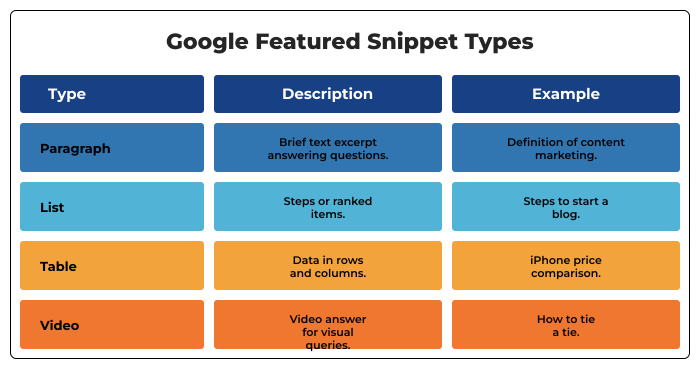
There are several types of Google featured snippets, and understanding them is crucial for optimizing your content effectively:
2.1 Paragraph Snippet
This is the most common format. It includes a brief 40–60 word text excerpt that answers a “what,” “why,” or “how” question.
Example: A search for “What is content marketing?” may show a paragraph with a definition pulled from a blog.
2.2 List Snippet (Numbered or Bulleted)
These snippets show steps or ranked items. They’re ideal for how-to guides, recipes, or lists.
Example: “Steps to start a blog” might return a numbered list.
2.3 Table Snippet
Google pulls data formatted in rows and columns often used for pricing, comparison charts, or schedules.
Example: A search for “iPhone price comparison” may show a table.
2.4 Video Snippet
Sometimes, Google displays a video (usually from YouTube) as a featured answer especially for visual or process-driven queries like “how to tie a tie.”
In short, featured snippets on Google are highly valuable for visibility, brand authority, and organic reach especially when your content is optimized to match one of these formats.
3. Why Are Featured Snippets Important for SEO?
As the digital search landscape evolves, ranking on page one is no longer enough. Featured snippets those boxed results at the very top of Google’s search results have changed the game entirely. These highly visible answers often appear above the traditional #1 ranking, which makes them a critical asset in modern SEO strategies.For those seeking a complete SEO strategy that includes snippet optimization and more, check out our SEO solutions for actionable help.
Let’s explore why featured snippets are important for growing your search presence and staying ahead of competitors.
3.1 Zero-Click SEO Impact
Featured snippets play a central role in the rise of zero-click searches where users find their answer on the SERP itself and don’t click through to any site. While this may reduce total website traffic in some cases, it also highlights a major shift in search behavior. Users now rely on Google to surface the most relevant information immediately.
Instead of resisting this trend, smart marketers optimize their content for snippets, capturing attention where it matters most right on the results page.
3.2 Visibility and Credibility Boost
A featured snippet instantly boosts your brand’s visibility. Appearing in a snippet signals that Google trusts your content enough to showcase it as the best answer. This not only improves your authority in the eyes of users but also builds credibility in your niche.
It’s like becoming the “go-to expert” for specific topics without paying for ads or relying on backlinks alone.
3.3 Higher CTR Without Top Rankings
Even if your page ranks #3 or #4 organically, winning a featured snippet lets you leap to the top. This can result in higher click-through rates (CTR), especially when the snippet teases just enough to make users curious.
That’s why featured snippets are important they offer visibility, traffic, and trust, often without needing to outrank everyone else.
4. Where Are Featured Snippets Positioned on SERPs?
To understand the value of featured snippets, it’s essential to know where they appear and how they stand out from other search results. Their position alone gives them a strategic advantage over both organic results and paid advertisements.
Let’s explore where are featured snippets positioned on SERPs and why this matters for your SEO strategy.
4.1 Typical Placement on Google Search Results
Featured snippets are usually placed above all organic search results, commonly referred to as position zero. This means even if your page doesn’t hold the #1 spot in the traditional ranking order, it can still appear first in the results if Google selects your content as a featured snippet.
The snippet appears in a highlighted box, often including the page title, URL, and a brief excerpt that directly answers the search query. Because of this prime placement, featured snippets receive more visibility and are often the first thing users see when they perform a search.
4.2 How They Differ from Regular Rankings and Paid Ads
Unlike regular organic listings, featured snippets are not based solely on rank but on how well the content answers the user’s query. You might see a snippet pulled from the third or fourth-ranked page, depending on its structure and clarity.
They also differ from paid ads, which appear at the top but are marked as “Sponsored.” Featured snippets are earned, not bought, and appear more trustworthy to users because they are selected algorithmically based on content quality not advertising budget.
5. Types of Content That Appear in Featured Snippets
If you’re planning to optimize your content for featured snippets, it’s important to understand the formats Google uses. Featured snippets are not limited to one type of content they come in multiple formats, each tailored to the kind of question being asked.
Here are the four main types of content that appear in featured snippets:
5.1 Paragraphs (Definitions and Direct Answers)
This is the most common type of featured snippet. It appears as a short text block typically 40 to 60 words that directly answers a user’s question. These are often triggered by queries that start with “What is,” “Why,” or “How.”
Example:
Search: What is digital marketing?
Featured Snippet: A short definition of digital marketing pulled from a trusted site.
To win this type, structure your content to provide a concise, clear answer immediately after the heading.
5.2 Lists (Steps or Best-Ofs)
These appear as numbered or bulleted lists and are ideal for how-to guides, recipes, rankings, and tutorials.
Example:
Search: Steps to create a blog
Featured Snippet: A numbered list showing each step.
Break down your content logically using headings and list tags (<ol>, <ul>) to improve your chances.
5.3 Tables (Data Summaries and Comparisons)
Google pulls tabular data from your content when users are looking for comparisons, schedules, or statistics.
Example:
Search: Laptop comparison chart
Featured Snippet: A table showing brand, specs, and prices.
Use proper HTML table formatting for clarity and crawlability.
5.4 Videos (How-To Visual Content)
Video snippets often from YouTube appear for step-by-step processes, DIY tutorials, or product demos. Google highlights the exact timestamp that answers the query.
Creating video content with clear titles and chapters can boost your chances of being featured.
6. How to Structure Your Content for Featured Snippet SEO
If you want to win a Google Featured Snippet, simply having good content isn’t enough you need to structure it in a way that makes it easy for Google to extract and display. Google’s algorithm scans your page looking for clear, direct answers to common queries, and the right formatting makes all the difference.
Here’s how you can structure your content to increase the chances of appearing in featured snippets:
6.1 Use Clear Headers (H2/H3)
Google uses headers to understand the layout and hierarchy of your content. Break your content into sections with descriptive H2 and H3 tags, especially when answering common questions. For example, if you’re targeting the query “What is content marketing?”, use a heading like:
H2: What Is Content Marketing?
Follow it with a short, clear definition. This tells Google exactly where to look.
6.2 Answer the Query in 40–60 Words
Google prefers concise answers. Try to answer the target question immediately below the header using a 40–60 word paragraph. This is the ideal length for paragraph-type featured snippets.
Example:
“Content marketing is a strategic approach focused on creating valuable, relevant, and consistent content to attract and retain a clearly defined audience.”
6.3 Use Bullet Points or Numbered Lists
When writing step-by-step instructions, processes, or “best of” articles, use numbered or bulleted lists. These are often pulled into list-style featured snippets. Make each step clear and easy to scan.
6.4 Include Relevant Keywords Naturally
Incorporate your primary and related keywords naturally into the headers and body text. Don’t keyword-stuff just ensure that the query you’re targeting is phrased exactly in at least one header and answered below it.
6.5 Add Schema Markup for Better Indexing
Schema markup (structured data) helps search engines better understand the context of your content. Adding schema such as FAQPage, HowTo, or Article can improve your eligibility for enhanced SERP features, including featured snippets.
Use tools like Google’s Structured Data Markup Helper or plugins like Rank Math or Yoast (for WordPress) to implement schema easily.
7. Tools to Identify and Track Featured Snippet Opportunities
Optimizing for featured snippets is only half the battle tracking and identifying opportunities is equally important. The right tools can help you discover which queries already have featured snippets, where your site has a chance to rank, and how well your content is performing. Below are some essential tools to help you with this process.
7.1 Google Search Console
Google Search Console (GSC) is a free and powerful tool for understanding how your website appears in search results. While GSC doesn’t explicitly show featured snippet positions, you can identify potential snippet opportunities by filtering for queries with high impressions but low clicks. This often signals a zero-click query, possibly caused by an existing featured snippet.
Check which keywords are bringing visibility to your content and then refine those pages to target snippet-friendly formatting.
7.2 Semrush / Ahrefs (SERP Feature Filters)
Both Semrush and Ahrefs allow you to filter keywords by SERP features including featured snippets. These tools help you:
- Find keywords that currently trigger featured snippets
- See which competitors own those snippets
- Track whether your content appears in or loses a snippet
In Ahrefs, the “SERP features” filter is particularly useful for identifying gaps where you could optimize your content. In Semrush, the Featured Snippet Report within Position Tracking gives real-time visibility into your snippet wins.
7.3 SurferSEO or Frase for Optimization
Tools like SurferSEO and Frase focus on content optimization. They analyze top-ranking pages and recommend exact keyword usage, content structure, and length helping you align your content with snippet-worthy formats.
These tools even suggest specific questions and phrases to target, increasing your chances of being pulled into the featured box.
8. Common Mistakes to Avoid While Targeting Featured Snippets
Winning a featured snippet requires more than just creating helpful content. It also demands precise formatting, clear intent, and user-first SEO practices. Many websites miss the opportunity to rank in featured snippets simply because of common, avoidable mistakes.
Here are three key errors you should steer clear of when trying to rank for featured snippets:
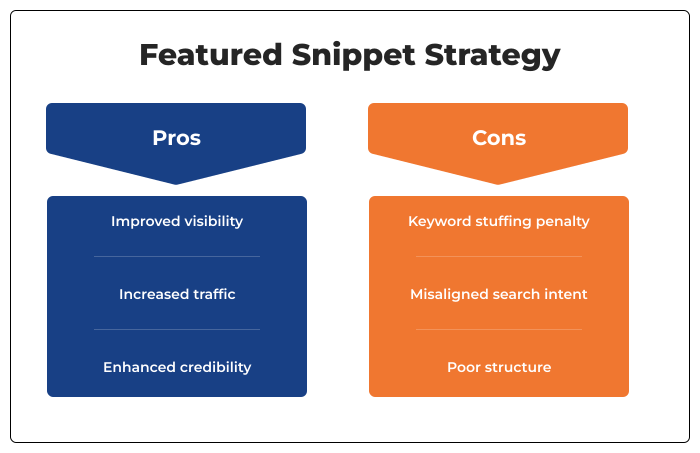
8.1 Keyword Stuffing
Using your target keyword excessively in an attempt to signal relevance can do more harm than good. Not only does keyword stuffing weaken readability, but it also makes your content appear spammy something Google actively penalizes.
Instead, use your primary keyword naturally in key areas like the heading, the first sentence of your answer, and a few supporting points. Over-optimization can make your content less useful and reduce your chances of being selected for a snippet.
8.2 Ignoring Search Intent
One of the biggest mistakes in content creation is not aligning with the user’s intent. If someone is looking for a simple answer, and your page offers a long-form blog post with no quick takeaway, you’re unlikely to win the snippet.
Understand the intent behind each query:
- Informational: Provide definitions or explanations.
- Transactional: Highlight comparisons or benefits.
- Navigational: Offer quick links or summaries.
Matching your content type and format to the search intent is essential for snippet success.
8.3 Skipping Structure and Formatting
Google favors content that’s well-structured and easy to parse. If your page lacks proper headers, bullet points, lists, or clear paragraph formatting, it becomes harder for Google to extract your content into a snippet.
Use H2/H3 headers, concise answers, and visual formatting (like tables or lists) to make your content snippet-friendly.
Conclusion
Featured Snippets are no longer a bonus; they’re a critical part of modern SEO strategy. By structuring your content with clear headers, concise answers, lists, and tables, you increase your chances of earning position zero on Google.
These snippets offer unmatched visibility, drive higher trust, and even outperform top organic results in some cases. But success doesn’t come from publishing once it comes from regularly auditing and refining your content based on performance data, user intent, and evolving SERP features.Use tools like Google Search Console, Semrush, and SurferSEO to identify opportunities and track your progress.
In a world dominated by zero-click searches and voice assistants, optimizing for Featured Snippets is one of the smartest moves you can make. Start small, stay consistent, and you’ll soon see your content rising to the top literally.
Check Out our latest blog on “Best Ecommerce Website Builders for Fashion & Apparel Brands”