1. Introduction – What Are AI Agents and Why They Matter
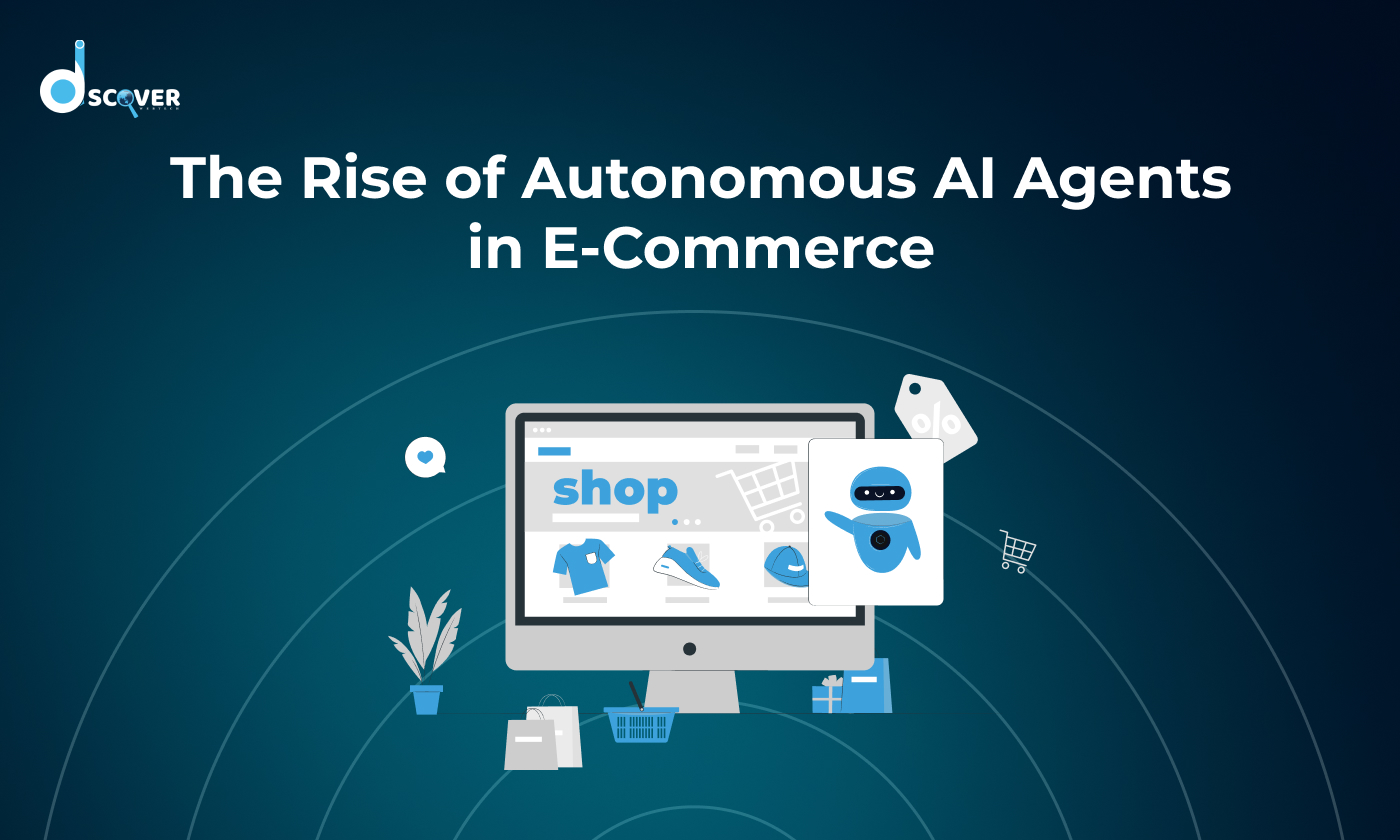
In the world of online shopping, things are changing fast. AI agents are computer programs that can perform tasks on their own, without needing constant human guidance. In e-commerce, these agents can help you find products, compare prices, recommend items, and even complete purchases automatically.
Think of an AI agent as a personal shopping assistant who knows your preferences, budget, and style. Instead of spending hours searching online, the AI agent can do it for you in seconds, making shopping faster, easier, and more personalized.
AI agents are important because they are not just tools, they are changing how we shop. Retailers are starting to rely on these systems to reach customers, and consumers are beginning to trust them for smarter, faster shopping decisions. This shift is the beginning of a new era in e-commerce, where AI agents play a central role in both the shopping experience and the retail industry.
Table of Contents
2. How AI Agents Help You Shop
AI agents are transforming online shopping by making it faster, smarter, and more convenient. Unlike traditional e-commerce tools, AI agents don’t just show you products. They understand your needs, learn your preferences, and act on your behalf. They can recommend items, compare options, and even complete purchases, creating a seamless shopping experience that saves time and effort. Let’s explore how they do this.
2.1 Personalized Product Recommendations Tailored to You
AI agents act like a personal shopping assistant who knows your style, interests, and budget. They analyze your previous purchases, browsing behavior, and preferences to suggest products that are most relevant to you. For example, if you frequently buy sports shoes, the AI agent will highlight new arrivals in your favorite brands or recommend shoes that match your style.
Unlike standard recommendation engines that give generic suggestions, AI agents can provide highly personalized advice. They consider your lifestyle, shopping history, and even your social media likes. This makes the shopping experience feel more like a conversation with a knowledgeable friend rather than browsing a website randomly.
2.2 Comparing Prices and Features Instantly
One of the biggest challenges in online shopping is comparing prices, features, and reviews across multiple websites. AI agents make this process effortless. They can scan dozens of stores in seconds, highlight the best deals, and even factor in shipping costs and delivery times.
For example, if you want to buy a laptop, the AI agent can compare models, read reviews, show price differences, and tell you which retailer offers the best value. This saves hours of research and ensures that you get the best product for your needs. Over time, AI agents become smarter by learning what matters most to you, whether it is price, quality, or brand reputation.
2.3 Streamlined Checkout and Payment Automation
AI agents also make buying products easier than ever. They can automatically fill in your shipping details, apply discount codes, select the fastest delivery options, and process payments securely. Some AI agents can even complete purchases on your behalf once a certain price or condition is met, so you do not have to monitor sales constantly.
This automation reduces friction in the shopping process, ensuring a faster and smoother checkout experience. For busy shoppers, it means less time worrying about logistics and more time enjoying products. Retailers also benefit because customers are more likely to complete purchases when the process is simple and frictionless.
3. Top AI Platforms in E-Commerce
The rise of AI agents in online shopping is being driven by several powerful platforms. These platforms are making it easier for consumers to find, compare, and buy products while giving retailers new ways to reach customers. They are changing the way people shop online by offering personalized recommendations, faster checkout, and seamless interactions across multiple stores and apps. As more consumers rely on AI for shopping, these platforms are becoming central to the e-commerce ecosystem, shaping both customer experiences and retail strategies.
3.1 ChatGPT: Your AI Shopping Assistant
ChatGPT is no longer just a chatbot for answering questions. It is evolving into a full-fledged AI shopping assistant. By integrating with apps like Spotify, Figma, Shopify, Etsy, and Stripe, ChatGPT can help users discover products, compare options, and even make purchases without leaving the chat interface.
With features like Instant Checkout, ChatGPT can securely process payments and complete transactions, making shopping fast and convenient. It can also provide personalized recommendations based on user behavior and preferences. For consumers, this means a seamless and highly tailored shopping experience, and for retailers, it offers a new channel to reach customers more effectively.
3.2 Google Gemini: Smart Shopping with AP2 Protocol
Google Gemini, with its AP2 protocol, is another major player in AI-driven commerce. It enables AI agents to not only find products but also take action, such as initiating purchases automatically when conditions are met. For example, a Google Gemini agent could book a flight when the price drops or buy concert tickets as soon as they become available.
While Gemini is still growing compared to ChatGPT, it has the advantage of being integrated into Google’s vast ecosystem of search and services. This allows AI agents to pull in real-time data, product information, reviews, and pricing across multiple sources, making smart recommendations and purchases faster and more reliable.
3.3 Perplexity and Other Emerging AI Retail Tools
Perplexity and other emerging platforms are also shaping the future of agentic commerce. Perplexity’s features, such as “Buy with Pro,” allow users to browse products and complete one-click purchases directly within the platform. Partnerships with tools like Firmly.ai and PayPal make it easier for merchants to connect and manage transactions seamlessly.
Other emerging tools focus on specific parts of the e-commerce experience. Some specialize in automated ad creation, enhanced product data management, or personalized customer engagement. Together, these platforms are creating a robust ecosystem for AI-driven shopping that benefits both consumers and retailers.
4. Why Consumers Are Using AI Agents
AI agents are becoming increasingly popular among online shoppers because they make the shopping process faster, easier, and more convenient. Consumers are turning to these smart assistants for several reasons, from saving time to getting better deals and enjoying a personalized shopping experience. These agents are not just tools, they act like personal shopping assistants that understand user preferences, remember past behavior, and provide recommendations that are highly relevant. As more people experience the benefits, AI agents are rapidly becoming an essential part of online shopping, helping users navigate the growing number of products and platforms more efficiently.
4.1 Saving Time with Automated Shopping
One of the biggest benefits of AI agents is saving time. Instead of manually searching for products, comparing options, and checking multiple websites, AI agents can do all of this in seconds. They quickly find products that match your preferences and even handle repetitive tasks like checking stock availability or tracking price drops.
- Automates searching across multiple stores in seconds
- Reduces hours spent browsing for products
- Handles routine tasks like stock checking automatically
For busy shoppers, this means less time spent browsing and more time enjoying the products they want. It also reduces the frustration of searching endlessly for the right item. By automating routine shopping tasks, AI agents allow consumers to focus on making better decisions rather than spending hours on research.
4.2 Better Deals and Price Tracking
AI agents are excellent at finding the best deals. They can compare prices across multiple retailers, alert you to discounts or promotions, and even apply coupons automatically during checkout. Some AI agents can monitor prices over time and notify you when a product drops below your desired price.
- Compares prices across multiple online stores
- Tracks discounts, promotions, and coupons automatically
- Alerts users when products reach their target price
This capability ensures that consumers always get value for their money. Instead of relying on guesswork or visiting multiple stores, shoppers can trust AI agents to find the best deals efficiently. This not only saves money but also adds convenience and confidence to the shopping experience.
4.3 Enhanced Shopping Experience with Personalization
AI agents personalize the shopping experience in ways traditional e-commerce tools cannot. They remember your preferences, past purchases, and even your browsing habits to suggest items that are truly relevant. Over time, the recommendations become smarter and more aligned with your interests.
- Provides product suggestions based on past purchases and preferences
- Reminds users to reorder favorite items or suggests complementary products
- Creates a tailored shopping experience that feels personal
Personalization also extends to timing and convenience. For example, AI agents can remind you to reorder favorite items, suggest complementary products, or recommend seasonal products based on your style. This makes online shopping feel more thoughtful and tailored, as if you have a personal assistant dedicated to helping you find exactly what you need.
5. Opportunities for Retailers
AI agents are creating exciting opportunities for retailers to engage customers, improve visibility, and optimize operations. By integrating AI into their business, retailers can provide faster, smarter, and more personalized shopping experiences. AI is not just a tool for automation, it is becoming central to shaping how customers discover, interact with, and purchase products. Retailers who embrace AI now can strengthen brand loyalty, improve efficiency, and gain a competitive edge as agentic commerce continues to grow.
5.1 Building Proprietary AI Agents for Customers
Retailers can develop their own AI agents that directly interact with customers. These agents can provide personalized product recommendations, answer questions in real time, and even complete purchases autonomously. By owning the AI experience, retailers retain a direct connection with customers, ensuring the brand stays front and center.
Benefits include:
- Enhanced customer loyalty through personalized interactions
- Increased sales from AI-driven recommendations and upselling
- Valuable first-party data to understand consumer preferences
Proprietary AI agents learn from customer behavior, becoming smarter over time. This allows retailers to continuously improve the shopping experience and offer services that third-party agents cannot replicate, creating a competitive advantage.
5.2 Increasing Brand Visibility on AI Platforms
As AI agents become the primary way consumers find products, retailers need to focus on discoverability. Optimizing product listings, images, and descriptions ensures that AI agents recognize and recommend their offerings. Retailers can also participate in AI-driven advertising and sponsored recommendations to appear at critical decision points. Increased visibility helps retailers reach a wider audience, influence purchase decisions, and strengthen brand recognition across AI ecosystems.
5.3 Using AI to Improve Store Operations
AI can also transform the way retailers manage their stores behind the scenes. By integrating AI into operations, businesses can streamline processes, reduce errors, and make smarter decisions. A step-by-step approach might include:
- Data Collection – Gather sales, inventory, and customer behavior data.
- AI Integration – Implement AI tools for inventory management, demand forecasting, and automated customer support.
- Monitoring & Analysis – Use AI to analyze trends, identify inefficiencies, and predict demand patterns.
- Optimization – Automate repetitive tasks, adjust stock levels, and improve order fulfillment.
- Continuous Improvement – Update AI models regularly to refine predictions and enhance operational efficiency.
By following this approach, retailers can improve efficiency, ensure better stock management, and provide faster, more reliable service to customers. AI-driven operations save time, reduce costs, and help retailers respond quickly to market trends.
6. Challenges for Traditional Shopping
While AI agents bring innovation and efficiency, they also introduce new challenges for traditional retailers. The rise of AI-driven commerce is changing how people shop and how brands interact with customers. For many traditional stores, keeping up with these rapid shifts requires major adjustments in technology, strategy, and customer engagement.
Traditional retailers now need to rethink how they attract and retain customers in a world where AI systems handle most interactions. The focus is shifting from physical presence and human service to digital visibility and data-driven personalization. Adapting to these new expectations is not just an option but a necessity for staying relevant in the evolving e-commerce landscape.
6.1 Losing Direct Contact with Customers
One of the biggest challenges for traditional retailers is losing direct interaction with shoppers. When AI agents handle most of the communication and recommendations, customers may start building loyalty toward the platform instead of the brand. This shift makes it harder for retailers to build emotional connections and long-term relationships with their audience.
Without personal touchpoints like in-store experiences, live chats, or personalized emails, brands risk becoming invisible behind the AI interface. To overcome this, traditional retailers need to focus on brand storytelling, loyalty programs, and unique experiences that make them stand out even when AI agents mediate the shopping journey.
6.2 Dependence on Third-Party AI Platforms
Another challenge is the growing dependence on large AI platforms such as ChatGPT or Google Gemini. Many retailers rely on these systems to reach customers, process transactions, and manage recommendations. However, this dependence can limit control over customer data, pricing, and visibility.
Retailers may also need to pay commissions or listing fees to appear on these AI-driven platforms, similar to what happens on traditional marketplaces. This can reduce profit margins and make it harder for smaller retailers to compete. To counter this, businesses can invest in developing their own AI solutions or collaborate strategically with platforms while protecting their brand independence.
6.3 Increased Competition on Price and Delivery
AI agents make it extremely easy for customers to compare products, prices, and delivery options in seconds. While this benefits shoppers, it puts pressure on retailers to offer competitive pricing and faster delivery. For many traditional retailers, this means adapting supply chains, improving logistics, and managing tighter profit margins.
In an AI-driven marketplace, convenience often wins. Retailers who rely solely on traditional methods may struggle if they cannot match the speed and efficiency that AI-powered systems enable. The key to staying competitive lies in balancing technology adoption with customer trust, product quality, and unique brand value.
7. The Future of AI Shopping
The future of online shopping is moving toward a world where AI agents take the lead. Instead of manually searching, comparing, and buying, customers will rely on intelligent agents to do everything for them. These AI systems will not just respond to user requests but will also anticipate needs, negotiate prices, and make purchases automatically. For retailers, this shift represents both an exciting opportunity and a major transformation in how business is done.
7.1 Agent-to-Agent Commerce: AI Interacting with AI
One of the most fascinating changes ahead is agent-to-agent commerce. In this model, AI systems on both sides, buyers and sellers, interact directly. For example, your personal AI assistant could negotiate with a retailer’s AI agent to find the best deal, apply available discounts, and finalize the purchase instantly.
- AI systems will handle real-time negotiations and transactions
- Faster and smarter digital marketplaces will emerge
- Retailers must ensure transparency and fairness in AI interactions
This will create a faster, smarter, and more efficient digital marketplace. It removes human delays and makes transactions happen in real time. Retailers will need to train their AI systems to understand customer preferences, respond accurately, and build trust through consistent results.
7.2 Fully Automated Shopping Experiences
In the near future, shopping could become almost fully automated. Imagine your AI assistant automatically restocking household supplies, ordering clothes in your preferred size when new arrivals drop, or booking travel essentials before prices rise.
What makes it important:
- Shopping will become effortless and time-saving
- AI systems will predict and fulfill needs automatically
- Retailers will have to adapt to continuous, data-driven purchases
This kind of hands-free commerce will make life more convenient for consumers and open new possibilities for businesses. Retailers will need systems that support ongoing AI-driven interactions rather than one-time purchases while ensuring customer data remains private and secure.
7.3 What This Means for Shoppers and Retailers
For shoppers, AI-powered shopping means more convenience, personalization, and smarter spending. It reduces decision fatigue by filtering thousands of options and presenting the best choices instantly. Over time, AI agents will know customers so well that shopping could become effortless and predictive.
For retailers, this new era means adapting to a completely different customer journey. They must understand how AI-driven recommendations work and find ways to keep their products visible.
- Shoppers will enjoy hyper-personalized and predictive shopping experiences
- Retailers must ensure visibility in AI-driven product listings
- Building customer trust and transparency will define long-term success
8. Frequently Asked Questions (FAQs)
1. What are AI shopping agents?
AI shopping agents are smart digital assistants that help people find, compare, and buy products online. They understand your needs, suggest the best options, and can even complete purchases for you, making online shopping faster and easier.
2. How do AI agents change the shopping experience?
Instead of visiting multiple websites, users can simply tell the AI what they need. The agent quickly searches, compares, and shows the best deals. It also handles checkout and payment, creating a smooth and personalized shopping experience.
3. What are some popular AI platforms in e-commerce?
Top AI platforms like ChatGPT, Google Gemini, and Perplexity are leading the shift toward AI-driven shopping. ChatGPT connects users with products on platforms like Shopify, Gemini offers automated buying recommendations, and Perplexity combines search with direct shopping options.
4. Why are retailers investing in AI shopping agents?
Retailers use AI agents to reach more customers, boost visibility, and improve personalization. These tools also streamline operations by automating inventory, product updates, and customer engagement, helping businesses save time and increase sales.
5. What is the future of AI shopping?
The future lies in agent-to-agent commerce, where AI systems on both sides communicate and complete transactions automatically. Soon, your AI assistant could predict your needs, compare deals, and make purchases for you, all without manual effort.
6. Will AI agents replace human shopping completely?
Not entirely. AI will handle routine shopping tasks, but humans will still make choices based on emotions and personal preferences. In the future, shopping will be a blend of human decision-making and AI-powered convenience.
9. Conclusion – What It Means for Shoppers and Retailers
The rise of autonomous AI agents in e-commerce marks a major shift in how shopping happens. For shoppers, it means less effort, more personalized recommendations, and faster decisions. Instead of spending hours comparing products, AI does the hard work by finding the best deals, ensuring timely delivery, and even predicting future needs.
For retailers, this shift brings both opportunities and challenges. Businesses that adapt quickly can reach more customers through AI-driven platforms, offer smarter shopping experiences, and streamline operations. However, those that resist change risk losing visibility and customer trust in a market increasingly guided by automation.
In the coming years, AI agents will not just assist shoppers, they will become trusted digital partners shaping buying habits. The key for both consumers and retailers is to embrace this evolution early and find ways to work with AI rather than against it. The future of commerce belongs to those who understand that intelligence, human and artificial, can create a smarter, more connected shopping world.
Check out our latest blog on – “How AI Will Replace Traditional CMS Development in the Next 5 Years ”