1. Introduction
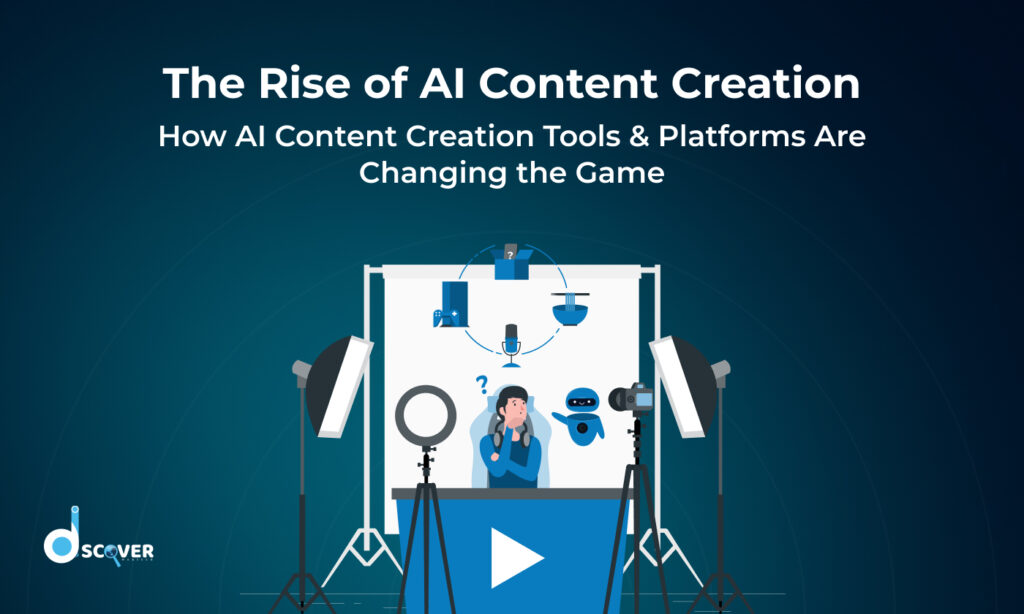
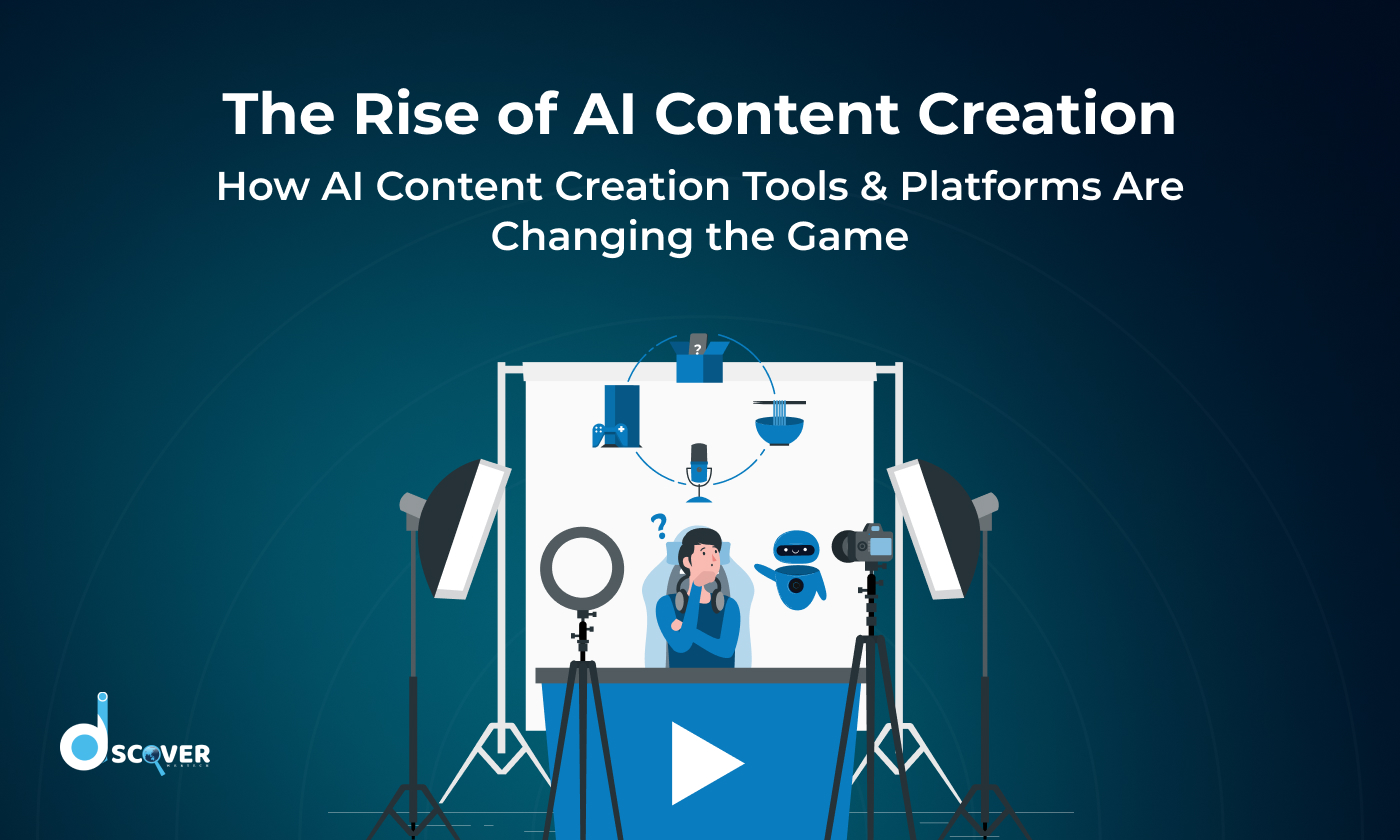
Artificial Intelligence (AI) has become a transformative force in the digital world, and one of its most exciting applications is content creation. From drafting blog posts to scripting videos and crafting social media captions, AI tools are rapidly changing how content is developed and delivered.
1.1 The Boom of AI Content Creation
In the past, creating high-quality content demanded significant time, effort, and expertise. Today, thanks to advancements in natural language processing (NLP) and machine learning, AI tools like ChatGPT, Jasper, Copy.ai, and Writesonic can generate near-human content in seconds. These platforms assist with idea generation, editing, rephrasing, and even full content creation offering an unprecedented level of speed and scale.
This surge in AI usage isn’t just a passing trend, it’s a paradigm shift. Businesses, marketers, and content creators are increasingly relying on these tools to meet the growing demand for fresh and engaging content.
1.2 Why This Topic Matters Today
We live in a hyper-connected, content-first world. Whether it’s ranking on search engines, capturing attention on social media, or nurturing customer relationships through email consistent content is key. However, maintaining this pace manually is unsustainable for many, especially smaller teams and solo entrepreneurs.
AI levels the playing field by empowering creators of all sizes to produce more content, faster. It also brings new possibilities for personalized messaging, multilingual content, and adaptive storytelling.
Yet, with great power comes great responsibility. The rise of AI-generated content also sparks important discussions around quality, originality, ethics, and the role of human creativity. As AI tools become more embedded in content strategies, understanding how to use them wisely is more crucial than ever.
In this blog, we’ll dive into the world of AI content creation, explore leading platforms, and uncover how they’re reshaping the future of content.
2. What Is AI Content Creation?
AI content creation refers to the use of artificial intelligence tools to generate content text, images, video, or audio with minimal human involvement. Powered by technologies like natural language processing (NLP) and machine learning, these tools can write blog posts, social media updates, ad copy, product descriptions, and more. The main goal is to automate and accelerate content production while ensuring relevance, accuracy, and tone.
2.1 Human-Generated vs AI-Generated Content
The biggest difference lies in the source and style of creation:
- Human-generated content is based on personal experience, creativity, cultural awareness, and emotional intelligence. It’s tailored to audience needs, reflects unique perspectives, and often includes storytelling elements that evoke strong connections.
- AI-generated content is produced using data patterns, training models, and algorithms. While it can mimic human writing styles and generate content quickly, it typically lacks emotional depth, originality, and cultural nuance. However, it performs exceptionally well in terms of:
- Speed and scalability: Ideal for generating large volumes of content in a short time.
- Consistency and structure: Useful for repetitive, data-driven, or templated content tasks.
- Speed and scalability: Ideal for generating large volumes of content in a short time.
Today, many marketers and writers adopt a hybrid approach combining AI’s efficiency with human creativity for the best results.
3. The Evolution of AI in Content Marketing
The journey of AI in content marketing has been nothing short of revolutionary. From basic automation tools to advanced generative AI, the technology has evolved rapidly transforming how brands ideate, create, and distribute content.
3.1 From Simple Automation to Generative AI
In the early days, AI in content marketing was mostly about automation. Tools were designed to perform repetitive tasks like email scheduling, content curation, grammar checks, or keyword suggestions. Platforms like Grammarly and HubSpot’s content tools helped marketers improve efficiency, but the creative aspect still required human input.
The real breakthrough came with the rise of generative AI systems capable of creating content from scratch. Natural Language Processing (NLP) models like OpenAI’s GPT series and Google’s BERT opened the doors to AI that could understand context, tone, and user intent. Suddenly, marketers could generate entire blog posts, social media captions, ad copy, and even video scripts with a few prompts. AI moved from being a helper to a co-creator.
3.2 Key Milestones in AI Content Development
Some major milestones include:
- 2015–2018: Introduction of deep learning models and transformer architectures (e.g., BERT)
- 2019: OpenAI launches GPT-2, showcasing the potential of generative text
- 2020–2022: Widespread adoption of GPT-3 and launch of tools like Jasper and Copy.ai
- 2023–Present: ChatGPT and multimodal AI tools (like image + text generation) gain mass popularity
These milestones mark a shift in how content is produced not just faster, but smarter. AI now understands audience behavior, search intent, and engagement metrics, helping brands create more personalized and effective content strategies.
As AI continues to evolve, it’s reshaping the content marketing landscape offering both incredible opportunities and new challenges for content creators.
4. Top AI Content Creation Tools & Platforms
AI content creation tools have become essential for marketers, entrepreneurs, and creators looking to produce high-quality content quickly. These platforms use natural language processing (NLP) to generate blog posts, ads, product descriptions, video scripts, and more with just a few prompts saving time and boosting productivity.
4.1 Leading AI Tools in the Market:
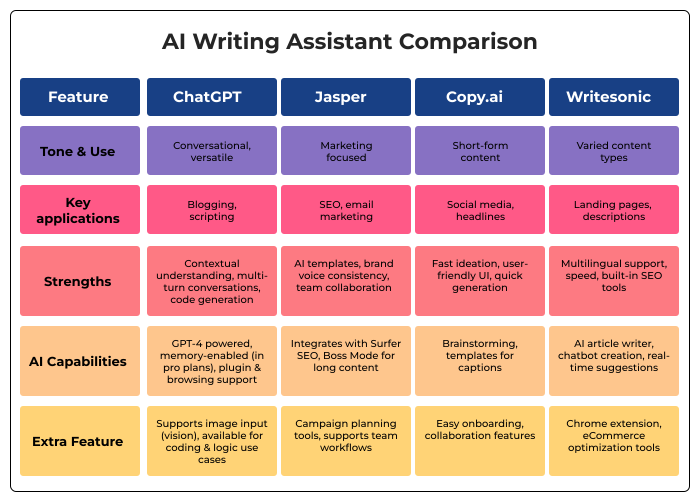
ChatGPT (OpenAI): Known for its conversational tone and versatility, ChatGPT is widely used for blogging, scripting, customer support, and brainstorming ideas. It supports code generation, image input (vision), and is powered by GPT-4 with plugin, browsing, and memory features available in pro plans.
Jasper: Designed for marketers and copywriters, Jasper offers templates for SEO, email marketing, and ad copy. It helps teams maintain brand voice consistency, plan campaigns, and create long-form content with Boss Mode and Surfer SEO integration.
Copy.ai: Ideal for short-form content like social media posts, headlines, and email subject lines. It’s fast, beginner-friendly, and great for brainstorming, with easy onboarding and built-in collaboration features.
Writesonic: Offers tools for both long-form and short-form content creation, including landing pages, product descriptions, and affiliate articles. It supports multiple languages, includes real-time suggestions, a Chrome extension, and built-in SEO and eCommerce tools.
4.2 Use Cases Across Industries:
These tools are now used across a variety of industries. In e-commerce, AI helps generate compelling product descriptions and promotional content at scale. The healthcare industry uses AI tools to create easy-to-understand medical articles, FAQs, and newsletters tailored for patients. In finance, they’re used to draft informative blog posts, explainer content, and compliance-friendly documents. The education sector benefits by simplifying complex topics and generating course materials. For marketing agencies, AI tools accelerate client content delivery and enable scalable production without compromising quality.
AI platforms are no longer optional; they’re a strategic advantage in today’s fast-paced content landscape.
5. How AI Is Transforming Content Creation
Artificial intelligence is fundamentally reshaping the content creation process, offering capabilities that go far beyond just generating text. From boosting efficiency to enabling hyper-personalized messaging, AI tools are transforming how businesses and creators engage with their audiences.
5.1 Speed and Scalability
One of the biggest advantages of AI content creation is speed. What used to take hours researching, drafting, editing can now be done in minutes. AI platforms can generate multiple content variations quickly, allowing brands to scale their content production without needing a massive team. Whether it’s blog posts, product descriptions, or ad copy, AI helps creators meet tight deadlines while maintaining consistency.
5.2 Personalization and Targeting
Modern AI tools can analyze user behavior, preferences, and engagement data to produce content that resonates on a personal level. This enables brands to create tailored messages for different audience segments. For example, AI can help write different versions of the same email for new subscribers, loyal customers, or dormant users improving relevance and boosting conversions. Personalized content no longer requires manual effort; AI automates it with precision.
6. AI vs Human Writers: Competition or Collaboration?
The rise of AI in content creation has sparked a common question: will AI replace human writers? The answer isn’t so black and white. Instead of viewing AI as a competitor, the smarter perspective is to see it as a collaborative one that enhances human creativity rather than replaces it.
6.1 Complementary Roles of Humans and AI
AI excels at speed, structure, and data-driven writing. It can instantly generate outlines, write first drafts, repurpose content, and optimize for SEO. However, it still lacks emotional depth, cultural sensitivity, and the nuanced storytelling that only humans can provide. Human writers bring empathy, originality, strategic thinking, and a deep understanding of audience tone elements that give content soul and meaning.
When used together, AI and humans form a powerful content team. For example, AI can generate content drafts or variations, while human editors refine tone, add creativity, and ensure brand alignment. This division of labor allows teams to produce more content in less time without sacrificing quality.
6.2 Case Studies and Examples of Synergy
Many successful companies are already using this hybrid approach. Marketing teams at agencies use tools like Jasper and ChatGPT to create blog outlines and ad copy drafts, which are then polished by copywriters for brand voice and emotional appeal. E-commerce businesses generate product descriptions in bulk using AI, but rely on human editors to localize the content for specific audiences. Even journalists use AI for data analysis or summarizing press releases, saving time for investigative work.
Rather than viewing AI as a threat, embracing it as a creative assistant leads to smarter workflows and better content outcomes. The future of writing isn’t man or machine it’s both working side by side.
7. SEO and AI Content: A Powerful Combination
AI and SEO are a match made in digital marketing heaven. As search engines evolve to prioritize user intent, relevance, and quality, AI-powered content creation tools are stepping up to help creators meet those demands more efficiently. When used strategically, AI can supercharge your SEO efforts from research to execution.
7.1 AI in Keyword Research and Optimization
One of the most time-consuming aspects of SEO is keyword research. AI tools now automate this process by analyzing search trends, user intent, and competitor content. Platforms like Ubersuggest, SEMrush, and Surfer SEO integrate AI to suggest relevant keywords, long-tail phrases, and content gaps all in real time.
AI also helps with on-page optimization by recommending meta titles, descriptions, headers, internal links, and content structure that align with best SEO practices. This means writers can focus more on value-driven content while AI handles the technical aspects of SEO.
7.2 Best Practices for AI-Generated SEO Content
While AI can generate SEO content quickly, a thoughtful approach is key to maintaining quality and avoiding penalties:
- Always review and edit AI-generated content to ensure accuracy, tone, and originality.
- Incorporate natural-sounding keywords instead of keyword stuffing.
- Use AI for structuring content, like outlining subheadings or summarizing sections.
- Add human insights, examples, or storytelling elements to make the content engaging.
- Optimize for search intent, not just keywords what is the reader really looking for?
When done right, AI content doesn’t just rank it delivers value. It helps marketers produce well-optimized content faster while still aligning with Google’s E-E-A-T (Experience, Expertise, Authoritativeness, Trustworthiness) standards.
8. The Future of AI Content Creation
AI content creation is still in its early stages, and what we’re seeing now is just the beginning. As technology continues to advance, the future promises even more powerful, creative, and personalized content experiences. From multimodal AI to real-time voice generation, the possibilities are expanding at a rapid pace.
8.1 Emerging Trends: Multimodal AI, Video & Voice
The next wave of AI tools is multimodal capable of understanding and generating content across different formats like text, images, video, and voice. Platforms are already emerging that can generate a complete blog post, design a thumbnail, and even create a short video summary all from a single prompt.
Voice-based AI content is also on the rise, thanks to the popularity of smart assistants and voice search. Tools are now being used to produce voiceovers for podcasts, training modules, and explainer videos with natural-sounding AI-generated voices.
Similarly, AI-generated video is gaining traction. From avatar-based explainer videos to short reels for social media, businesses are starting to leverage AI to produce high-quality visual content without hiring entire video teams.
8.2 Predictions and Industry Outlook
Looking ahead, AI content creation will become more personalized, interactive, and data-driven. We can expect tools to be tightly integrated with analytics platforms, allowing content to be adjusted in real time based on user behavior and engagement metrics.
While some fear automation may replace jobs, the more likely scenario is a shift in roles where humans focus on strategy, creativity, and ethical oversight, while AI handles execution and optimization.
In the future, content teams will evolve into AI-powered creative units, blending human insight with machine efficiency to deliver faster, smarter, and more dynamic content.
The brands that embrace this shift early will lead the next era of digital storytelling.
Conclusion
AI is no longer a futuristic concept, it’s a present-day powerhouse transforming how content is created, optimized, and delivered. From speeding up production to enabling personalization at scale, AI tools offer immense value across industries. While they may not replace human creativity, they can significantly enhance it when used strategically. If you’re looking to stay competitive, save time, and scale your content efforts without compromising quality, integrating AI into your content strategy is not just a smart move, it’s becoming a necessity. The key lies in using AI as a collaborator, not a replacement, to unlock your full creative potential.
Check out our latest blog on “GEO for E-commerce: Winning with Conversational AI in Shopping”