Artificial Intelligence (AI) has moved far beyond being just a buzzword; it’s now a driving force behind how businesses think, plan, and make decisions. From small startups to global enterprises, leaders are using AI not just to automate repetitive tasks but to gain deeper insights, predict outcomes, and shape smarter strategies. Decisions that once relied purely on human intuition are now guided by intelligent systems capable of processing massive amounts of data, recognizing hidden patterns, and suggesting actions that directly impact growth and efficiency. Whether it’s forecasting sales, optimizing marketing campaigns, or improving customer experience, AI is transforming decision-making into a faster, smarter, and more precise process.
Traditional business strategies used to depend heavily on past experiences and gut instinct. But in today’s competitive, data-driven world, that approach alone is no longer enough. The real shift lies in how AI has revolutionized strategic planning, turning information into intelligence. Through machine learning, predictive analytics, and real-time data analysis, businesses can now anticipate customer behavior, identify risks, and even simulate different outcomes before making a move. This has given decision-makers the ability to act proactively rather than reactively, making every choice more informed and impactful.
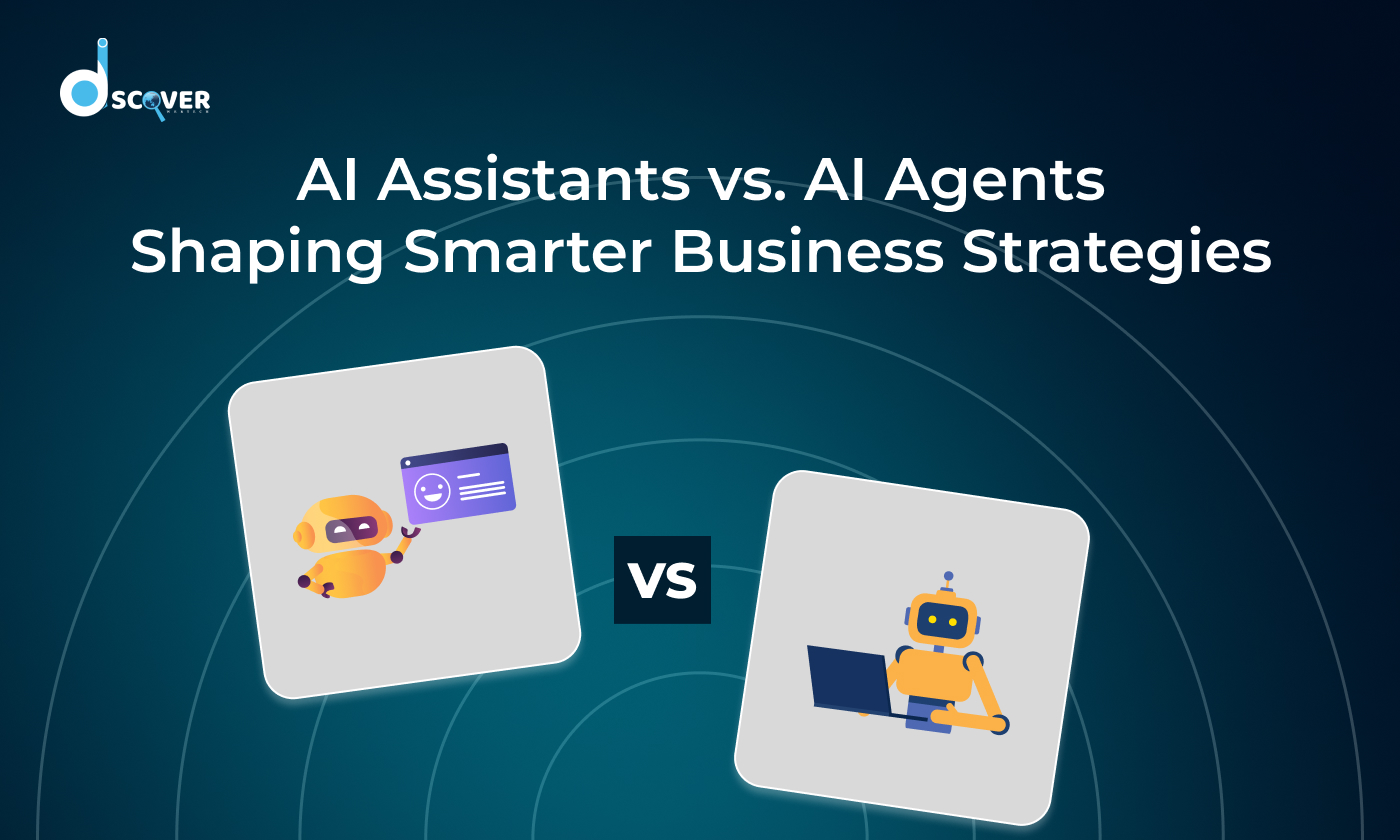
Within this transformation, there’s a key distinction that every business leader should understand: the difference between AI Assistants and AI Agents. While both are designed to make work easier, they operate on very different levels of intelligence and autonomy.
AI Assistants, like ChatGPT, Siri, or Alexa, help users make better decisions by providing guidance, insights, and recommendations. They’re great for supporting humans with information and analysis.
AI Agents, on the other hand, take things a step further. They don’t just suggest actions; they execute them. These systems can make decisions on their own, carry out tasks, and adapt based on goals or changing conditions, almost like digital employees.
Understanding this difference is crucial for businesses aiming to integrate AI effectively. Knowing when to rely on an assistant for support and when to empower an agent to take autonomous action can define how efficiently a company operates and how strategically it grows. It’s the difference between having a smart helper by your side and having an intelligent partner capable of shaping your business strategy in real time.
Table of Contents
2. AI Assistants 101: Your Smart, Helpful Sidekick
AI assistants have become one of the most useful innovations in today’s digital world. They act like smart companions that help you manage everyday tasks, whether it’s scheduling, writing, researching, or organizing information. Instead of spending time on routine or repetitive work, you can simply ask your AI assistant to do it for you. The goal is not to replace people but to make work faster, simpler, and more accurate.
From individuals to large companies, everyone is using AI assistants to improve productivity. They make it easier to handle complex workloads and allow people to focus on creative or strategic decisions. Whether you’re a busy professional managing projects or a small business owner juggling multiple tasks, an AI assistant can be your go-to helper for saving time and staying efficient.
Now, let’s understand what AI assistants actually do, some popular examples used in business, and when they truly shine in helping people work smarter.
2.1 What AI Assistants Do: Guidance, Suggestions, and Support
AI assistants are designed to guide, suggest, and support users across different tasks. They act like digital partners that can write, search, organize, and even think ahead based on your needs. For instance, they can help you draft an email, prepare a meeting summary, or recommend the best next step in a project.
In businesses, AI assistants simplify complex processes by automating daily operations. They can reply to customer messages, schedule appointments, create to-do lists, or analyze data within seconds. What makes them powerful is their ability to learn from your habits and preferences, becoming more accurate and personalized with every interaction.
2.2 Popular Examples in Business (ChatGPT, Siri, Google Assistant)
Some of the most popular AI assistants today are tools we already use daily. These assistants have become part of both personal and professional life, helping users stay productive and organized. They work across different devices and platforms, making them easily accessible anytime you need support. Their growing intelligence and integration with apps and workflows make them valuable for every type of business, from startups to large enterprises.
- ChatGPT helps with writing, brainstorming ideas, creating reports, and automating customer responses. It communicates in a conversational style and can adapt to different business needs.
- Siri is Apple’s voice-based assistant that helps users send messages, set reminders, and navigate through tasks hands-free. Many business professionals use Siri for managing meetings or quick communication.
- Google Assistant is known for its fast and reliable responses. It helps users perform searches, organize daily plans, and control connected devices. In workplaces, it’s often used for research, scheduling, and quick updates.
These assistants have become essential tools for modern professionals. They help teams work smarter instead of harder, saving both time and effort.
2.3 When AI Assistants Shine: Best Tasks and Scenarios
AI assistants perform best in repetitive, time-consuming, or data-driven tasks. They’re ideal for situations where speed and accuracy matter most.
Some common use cases include:
- Task and Time Management: Managing schedules, reminders, and daily planning.
- Customer Interaction: Handling FAQs and providing instant replies.
- Content and Communication: Writing emails, social posts, and reports.
- Data Analysis: Summarizing large files or giving quick insights.
Small businesses, freelancers, and corporate teams can all benefit from AI assistants. By taking care of everyday work, they help you focus on creativity, innovation, and strategy, things that truly drive growth.
AI assistants are not just tools; they’re trusted partners that help you navigate the fast-paced world of business with greater ease and confidence.
3. AI Agents 101: Autonomous Action-Takers for Your Business
AI agents represent the next big step in the evolution of artificial intelligence. Unlike AI assistants that primarily respond to commands and offer guidance, AI agents can think, plan, and take action on their own. They are designed to operate with minimal human input, handling complex workflows and making decisions based on goals you define. if AI assistants are like helpful teammates, AI agents are like independent project managers who can take charge and get things done.
3.1 What AI Agents Are and How They Differ from Assistants
AI agents are intelligent systems capable of understanding objectives, analyzing data, and performing tasks without constant supervision. They can break down large goals into smaller steps and complete them automatically. For example, if you ask an AI agent to research competitors, it won’t just search for data, it will organize information, summarize insights, and present findings in a report.
The biggest difference between AI assistants and AI agents lies in autonomy.
- AI assistants depend on user instructions and focus on short, task-based help.
- AI agents, on the other hand, act proactively. Once you give them a goal, they can plan, execute, and even adjust their actions if something changes.
This independence makes AI agents powerful tools for businesses that want to automate complex, multi-step processes while maintaining accuracy and efficiency.
3.2 Real-World Examples: Autonomous Scheduling, Research Agents, Workflow Automation
AI agents are already transforming how companies work. Some practical applications include:
- Autonomous Scheduling Agents: These can coordinate meetings across time zones, check team availability, and reschedule automatically if conflicts arise. Unlike traditional assistants, they handle everything from start to finish without needing approval for every step.
- Research Agents: Businesses use these agents to collect market data, monitor competitors, and generate summaries or reports. They can even track trends over time and alert teams when new opportunities appear.
- Workflow Automation Agents: These agents connect with multiple tools like CRM systems, emails, and project management apps to execute routine business operations. They can process data, send updates, or trigger tasks in other systems automatically.
These examples show how AI agents don’t just support your work, they actually perform the work, reducing the need for constant human oversight.
3.3 Tasks Best Suited for AI Agents
AI agents perform best in situations where independent decision-making, pattern recognition, and automation are needed. Some ideal use cases include:
- Project Management: Monitoring deadlines, assigning tasks, and updating progress automatically.
- Data Analysis and Reporting: Gathering information from multiple sources and generating meaningful insights.
- Customer Interaction: Handling advanced chatbot systems that can solve problems, escalate issues, or recommend solutions without human help.
- Business Process Automation: Streamlining workflows such as lead nurturing, onboarding, or inventory tracking.
Businesses that embrace AI agents gain a competitive edge by saving time, improving accuracy, and scaling their operations efficiently. As AI continues to evolve, these agents are set to become key players in helping organizations make smarter, faster, and more autonomous decisions.
4. Key Differences Between AI Assistants and AI Agents
While both AI assistants and AI agents are designed to make work easier, they function very differently. AI assistants are your guides and helpers, while AI agents are your doers and decision-makers. Understanding the difference between them helps businesses know when to use each one effectively. Let’s explore how they differ in terms of decision-making, autonomy, performance, and scalability.
4.1 Decision-Making Style: Assist vs. Act
AI assistants are built to assist humans by providing information, suggestions, or reminders based on user input. They wait for instructions and respond accordingly. For example, when you ask ChatGPT to create a report, it drafts one only when prompted.
AI agents, however, are built to act independently. Once given a goal, they can plan and execute multiple steps on their own. If you assign an AI agent to research competitors, it will find relevant data, organize it, and deliver a summary without needing constant direction. In short, assistants wait for input, while agents take initiative.
4.2 Level of Autonomy and Independence
Autonomy is the biggest factor that separates assistants from agents.
- AI assistants depend heavily on user instructions. They can suggest what to do next but will not act unless you confirm.
- AI agents work with a higher level of independence. They can make small decisions, adjust workflows, and continue working toward a goal even if something changes.
This makes AI agents more powerful for businesses that handle complex or ongoing tasks, as they can operate 24/7 without needing human supervision.
4.3 Accuracy, Speed, and Scalability
When it comes to performance, both assistants and agents are valuable but in different ways.
- AI assistants are best for quick, simple, and specific tasks like answering queries, managing schedules, or creating short pieces of content. They are fast and accurate but limited by the instructions given.
- AI agents, on the other hand, handle multi-step, large-scale tasks. They process massive data sets, identify patterns, and make informed decisions at high speed. Because they can run continuously and learn from outcomes, they are ideal for scaling operations without increasing costs.
Assistants enhance productivity, while agents drive automation and growth.
4.4 Table: Quick Comparison of Assistants vs. Agents
| Feature | AI Assistants | AI Agents |
| Primary Role | Provide guidance and suggestions | Take independent actions to achieve goals |
| Decision-Making | Reactive (act after receiving input) | Proactive (act based on objectives) |
| Level of Autonomy | Low (need user supervision) | High (can work without supervision) |
| Task Type | Simple and repetitive | Complex and multi-step |
| Learning Ability | Learns from user input | Learns from data and outcomes |
| Best For | Daily support and communication | Business automation and process management |
| Example Tools | ChatGPT, Siri, Alexa, Google Assistant | AutoGPT, BabyAGI, OpenDevin, AgentGPT |
AI assistants and agents are both transforming the business world but in different ways. While assistants make your day-to-day work smoother, agents take charge of full workflows. Together, they create a powerful ecosystem where human creativity meets machine efficiency.
5. How AI Is Shaping Smarter Business Strategies
Artificial Intelligence is no longer just a buzzword, it’s a key driver behind how modern businesses make smarter, faster, and more confident decisions. From marketing to sales and operations, AI-powered tools are helping organizations understand data better, predict outcomes, and act on insights with precision. While AI assistants focus on guiding and supporting decision-making, AI agents take it a step further by executing actions automatically. Together, they form a powerful combination that reshapes how businesses plan, operate, and grow.
5.1 Using AI Assistants to Inform Decisions
AI assistants play a big role in the decision-making process by providing timely insights, suggestions, and analysis. They help business leaders interpret complex data, summarize key findings, and recommend the best possible actions. For example, a marketing manager can use ChatGPT or similar AI assistants to analyze audience feedback, identify trending topics, or craft personalized content strategies.
In finance and operations, AI assistants help teams make informed choices by simplifying data dashboards and spotting patterns that humans might miss. Their biggest strength lies in their ability to turn information into intelligence, allowing businesses to make confident decisions backed by real-time data.
Simply put, AI assistants make you smarter and faster in deciding what to do next.
5.2 Using AI Agents to Execute Decisions Automatically
AI agents take things further by not just suggesting actions, but actually carrying them out. Once they receive a goal or strategy, they can plan, act, and adjust without needing constant supervision. For instance, in sales, an AI agent can automatically follow up with leads, send personalized emails, and update CRM records. In marketing, it can schedule social posts, monitor engagement, and optimize campaigns based on performance data.
What makes AI agents stand out is their autonomy and adaptability. If a plan needs tweaking, they can modify their approach in real time. This frees up human professionals to focus on creativity, relationship-building, and strategic thinking while agents handle the execution side efficiently.
AI agents essentially bridge the gap between planning and doing, ensuring that decisions are implemented quickly and accurately.
5.3 Case Studies: Marketing, Sales, and Operations
- Marketing: A retail brand used AI assistants to analyze customer behavior and preferences, identifying which products were trending in specific regions. AI agents then automatically adjusted ad placements and personalized email campaigns, resulting in a 25% boost in engagement rates.
- Sales: A B2B company employed AI agents to manage lead nurturing. Instead of waiting for human input, the agents sent follow-up messages, scheduled demos, and prioritized leads based on buying intent. This automation improved lead conversion and reduced response time dramatically.
- Operations: A logistics firm integrated AI agents into their workflow to optimize delivery routes and monitor real-time performance. The agents analyzed traffic patterns, adjusted schedules, and alerted managers when delays occurred, cutting delivery costs and improving service efficiency.
These examples show how AI assistants and agents work hand in hand to inform, execute, and enhance business strategies. By combining human intelligence with machine precision, businesses can operate smarter, adapt faster, and stay ahead in an increasingly competitive world.
6. Combining AI Assistants and Agents for Maximum Impact
Using AI assistants and AI agents together can completely transform how a business operates. While assistants help with thinking, planning, and analyzing, agents take those insights and turn them into real actions. When both work hand in hand, businesses can achieve greater productivity, accuracy, and growth with less manual effort.
6.1 Why Businesses Should Use Both Together
AI assistants and AI agents complement each other perfectly. Assistants act like smart advisors who collect and process data, while agents act like digital employees who execute tasks. For example, an assistant might suggest the best-performing ad strategy, and the agent can automatically launch the campaign and track results. By combining the two, businesses get the best of both worlds, human-like intelligence and machine-like efficiency.
6.2 Practical Workflow Examples
Imagine a sales team using both technologies. The AI assistant analyzes customer interactions and identifies warm leads, while the AI agent follows up with those leads, books calls, and updates the CRM automatically. In marketing, the assistant might write a blog post draft or suggest trending topics, and the agent could schedule the post, share it on social media, and track engagement. In customer service, the assistant could summarize customer issues, and the agent could create and assign tickets to the right support team.
6.3 Tips for Small and Medium-Sized Businesses
For SMBs, starting small and scaling gradually works best. Begin with an AI assistant to handle research, emails, or reporting. Once the workflow feels comfortable, add AI agents to automate repetitive tasks like scheduling, reminders, or customer follow-ups. Always monitor performance and fine-tune how both tools interact. The goal isn’t to replace your team but to empower them with smart support that saves time and boosts results.
When used together, AI assistants and agents can become the perfect mix of brain and hands, helping businesses of all sizes work smarter, grow faster, and stay ahead in today’s digital world.
7. Challenges and Considerations
AI assistants and agents are powerful tools, but using them wisely is just as important as adopting them. Businesses need to think carefully about how these systems are managed, who oversees them, and what risks come with automation. Without proper attention, issues related to errors, security, or ethics can affect both business operations and customer trust.
7.1 Human Oversight and Accountability
No matter how advanced AI becomes, human judgment remains vital. AI assistants and agents can process data, make suggestions, or even take actions, but they don’t fully understand human values or context. That’s why there must always be someone responsible for monitoring their output. For instance, an AI agent might approve discounts or send follow-up messages automatically, but a human should check whether these actions align with company goals and tone.
Key Practices for Oversight:
- Assign human reviewers to monitor AI-driven decisions regularly.
- Set clear boundaries on what tasks can be automated.
- Conduct frequent audits to ensure AI outputs stay accurate and ethical.
7.2 Ethical and Security Concerns
AI systems depend on large amounts of data to function effectively, and that makes data privacy and protection extremely important. Businesses must make sure that sensitive customer and company data is stored securely and handled responsibly. Ethical concerns also go beyond data security. AI should not make biased decisions or manipulate customer behavior unfairly. Companies need to understand how their AI models make decisions and ensure transparency in their use.
Best Practices for Ethics and Security:
- Use trusted and compliant AI platforms that safeguard user data.
- Avoid feeding sensitive or personal information into public AI tools.
- Implement ethical guidelines for AI use within your organization.
- Educate employees about responsible AI and data handling.
7.3 Avoiding Over-Reliance on AI
While AI can save time and increase efficiency, depending too much on it can limit creativity and human connection. Businesses that rely only on AI for customer communication may lose their personal touch. Similarly, leaders who depend entirely on data-driven insights might miss emotional or cultural factors that humans naturally understand.
Ways to Maintain Balance:
- Use AI for repetitive or data-heavy tasks like scheduling or analysis.
- Keep humans involved in creative and strategic decision-making.
- Blend AI insights with emotional intelligence for better results.
8. Future Outlook: Smarter Decisions in the AI Era
As AI continues to evolve, the future of business decision-making looks more intelligent, data-driven, and efficient than ever before. The line between AI assistants and AI agents will continue to blur as both systems become more capable of understanding human intent, emotions, and goals. Businesses that embrace these changes early will not only make faster decisions but also stay ahead in innovation and customer experience.
8.1 Emerging Trends: Predictive Agents and Multimodal Assistants
The next generation of AI tools will move beyond reacting to commands; they will start predicting what users need before being asked. Predictive agents will analyze behavior patterns, market shifts, and real-time data to recommend proactive actions. For instance, a predictive AI agent might detect a drop in customer engagement and automatically adjust a marketing campaign to improve results.
Multimodal AI assistants are another major trend. These systems can process and combine multiple types of data like text, speech, images, and video to understand context better. Imagine an AI assistant that can read an email, analyze an attached report, and generate a visual summary all within seconds. This evolution will make human-AI collaboration more natural and intuitive, enabling businesses to operate with greater intelligence and speed.
8.2 How AI Will Continue to Transform Business Strategy
AI’s role in business strategy is shifting from supportive to central. Instead of being just a tool for automation, AI is becoming a strategic partner that helps companies identify opportunities, forecast trends, and make confident decisions. From predictive analytics in finance to smart resource allocation in supply chains, AI will help leaders make decisions that are not only faster but also smarter and more evidence-based.
In the near future, organizations will integrate AI at every level of their operations, including marketing, HR, and customer service, to create connected ecosystems that think and act intelligently. Decision-making will become continuous rather than reactive, powered by real-time insights and automated execution.
9. Frequently Asked Questions (FAQs)
1. What is the main difference between an AI assistant and an AI agent?
An AI assistant helps you make better decisions by providing suggestions, insights, and guidance. An AI agent goes a step further as it can take action on its own based on set rules or goals. In simple terms, assistants advise, while agents act.
2. Can small and medium-sized businesses use AI assistants and agents effectively?
Absolutely! SMBs can start small with AI assistants for tasks like data analysis, marketing recommendations, or customer support. Once comfortable, they can introduce AI agents to automate repetitive tasks such as scheduling, lead management, and order tracking.
3. Are AI assistants and agents safe to use for business decisions?
Yes, they are safe when used responsibly. Businesses should ensure proper data protection, monitor AI-driven outcomes, and follow ethical standards. Keeping human oversight in place ensures accuracy and builds trust in AI-powered decisions.
4. How can AI assistants and agents work together in a company?
Think of them as a perfect duo: the AI assistant gathers information and suggests the best action, while the AI agent executes those actions automatically. This teamwork helps businesses save time, reduce manual work, and make smarter decisions faster.
5. What is the future of AI in business strategy?
The future is moving toward predictive and multimodal AI. Upcoming systems will not just understand text or voice but also analyze visuals, emotions, and patterns. Businesses that blend human creativity with AI intelligence will stay ahead with faster, data-backed, and more personalized strategies.
10. Conclusion: Choosing the Right AI for Your Strategy
As businesses move deeper into the age of artificial intelligence, the biggest advantage lies not in simply using AI, but in choosing the right type of AI for the right purpose. Both AI assistants and AI agents have unique strengths that can transform how organizations operate and make decisions. The key is understanding where each one fits into your strategy.
AI assistants are ideal for guiding, supporting, and helping teams make informed choices. They excel in areas where human interaction, creativity, and interpretation matter most. Whether it’s analyzing data, drafting content, or offering recommendations, assistants act as reliable partners that enhance human thinking without taking full control.
AI agents, on the other hand, are built for action. They can take decisions made by humans or assistants and execute them automatically. From scheduling tasks and managing workflows to handling customer queries or automating sales processes, AI agents bring speed, precision, and efficiency to everyday business operations.
When businesses use both together, they create a powerful combination of intelligence and execution. The assistant gathers insights and suggests the best course of action, while the agent implements it without delay. This not only saves time but also ensures that strategies turn into measurable outcomes quickly and effectively.
Before integrating AI into your strategy, think about your goals. Do you need support in decision-making or automation in execution? For small and medium-sized businesses, starting with AI assistants and gradually adding agents can be the best path forward. It allows time to build trust, refine processes, and ensure that human oversight stays strong.
In the end, success with AI is about balance. Use assistants to think smarter and agents to act faster. Together, they can help any business create strategies that are intelligent, adaptive, and ready for the future.
Check out our latest blog on – “The Next Chapter of Blogging and SEO: How AI Redefines What Truly Matters”