1. Introduction
The way websites are designed has changed dramatically in recent years. With the rise of Artificial Intelligence (AI), businesses can now build functional, visually appealing websites in just a matter of hours or even overnight. AI-powered tools can handle layouts, coding, and even suggest design elements, making the process faster and more efficient than ever before.
But while speed and automation are impressive, there’s still one thing AI can’t fully replace: human creativity. A website isn’t just about structure; it’s about emotion, storytelling, and creating an experience that connects with real people. This is where designers and creative minds still play a vital role.
As technology continues to evolve, the question is not whether AI will take over, but rather how humans and machines can work together. By blending AI’s efficiency with human imagination, businesses can create websites that are not only smart and functional but also original, memorable, and deeply aligned with their brand identity.
Table of Contents
2. The Rise of AI in Website Design
The influence of Artificial Intelligence on web design has been nothing short of revolutionary. What once required entire teams of designers and developers can now be accomplished in a fraction of the time with the help of AI-powered platforms. From automating layouts to suggesting design elements, AI has transformed the way websites are built and opened new possibilities for businesses, startups, and individuals who want to establish a strong digital presence quickly.
2.1 Evolution of AI in the design industry
AI has come a long way from being a futuristic concept to becoming an essential part of modern design. In the past, website building was a time-consuming process that required deep coding knowledge, design expertise, and countless hours of manual effort. Today, AI has changed this landscape by automating repetitive tasks like generating layouts, writing clean code, and optimizing user interfaces. Instead of weeks, websites can now be created in days or sometimes overnight, making web design more accessible to businesses of all sizes. This shift shows how AI has evolved from a supportive tool to a powerful driver of digital transformation in the design industry.
2.2 Popular AI tools shaping web development
Several AI-driven platforms are leading the way in transforming how websites are built. Tools like Wix ADI (Artificial Design Intelligence), Squarespace AI features, and Bookmark’s AIDA can automatically create websites by analyzing user preferences and industry-specific needs. AI-powered assistants like ChatGPT also help developers write code snippets, generate content, and debug issues faster. These tools not only speed up the process but also allow small businesses and non-technical users to create professional-looking websites without heavy technical expertise. As these platforms continue to evolve, they’re setting new standards for what “fast and efficient” web design really means.
3. Speed and Efficiency: What AI Brings to the Table
One of the biggest reasons AI has gained so much attention in web design is its unmatched speed and efficiency. Businesses no longer need to wait weeks for developers to code every element or for designers to sketch multiple versions of layouts. AI-powered tools can analyze requirements, generate options, and deliver a functional website in record time. This speed not only helps companies launch faster but also allows them to adapt quickly to changing market needs.
3.1 Faster website building compared to traditional methods
Traditional website development often involved lengthy processes, wireframing, coding, testing, and revisions, before a site went live. With AI, much of this work is automated. AI design assistants can instantly generate templates, adjust layouts, and even optimize for user experience, reducing turnaround time from weeks to hours. For startups and small businesses, this speed means they can establish an online presence almost immediately, staying ahead of competitors who rely on older methods.
3.2 Cost-effectiveness and scalability benefits
AI doesn’t just bring speed to website design, it also makes the process far more affordable and flexible. For businesses that want to grow without overspending, AI-powered tools offer practical solutions that keep costs low while supporting long-term scalability. Instead of investing heavily in full design teams, companies can achieve more with less.
- Lower design costs: Businesses don’t always need large design teams for basic websites.
- Affordable updates: AI tools make it simple to refresh layouts, add features, or fix issues without extra expense.
- Easier scalability: Adding new pages, products, or services can be done in minutes.
- Reduced dependency: Non-technical users can manage and update their sites without heavy reliance on developers.
4. The Human Touch: Why Creativity Still Matters
While AI is excellent at handling speed, structure, and functionality, it still lacks the emotional depth that human creativity brings to design. Websites are more than just digital storefronts; they are experiences that tell a brand’s story and connect with people on a personal level. This emotional connection is something only humans can craft because it requires empathy, imagination, and cultural awareness.
4.1 Emotional connection and storytelling in design
A great website does more than display information; it communicates a story. Human designers have the ability to understand emotions, values, and customer motivations, weaving them into visuals, colors, and layouts that resonate with audiences. Whether it is through compelling imagery, brand narratives, or user-friendly interactions, storytelling helps a brand feel authentic and memorable. AI may generate layouts, but it cannot replicate the creativity needed to evoke emotion and build trust.
4.2 Unique brand identity that AI can’t replicate
Every brand has its own personality, voice, and style. Human designers translate these elements into design choices that reflect uniqueness and authenticity. From custom illustrations and typography to tailored user experiences, these creative touches differentiate one business from another. AI tools often rely on pre-built templates and patterns, which may lead to generic outcomes. This is where human creativity stands apart, as it ensures that a website does not just look good but also feels true to the brand it represents.
5. Balancing Automation with Original Ideas
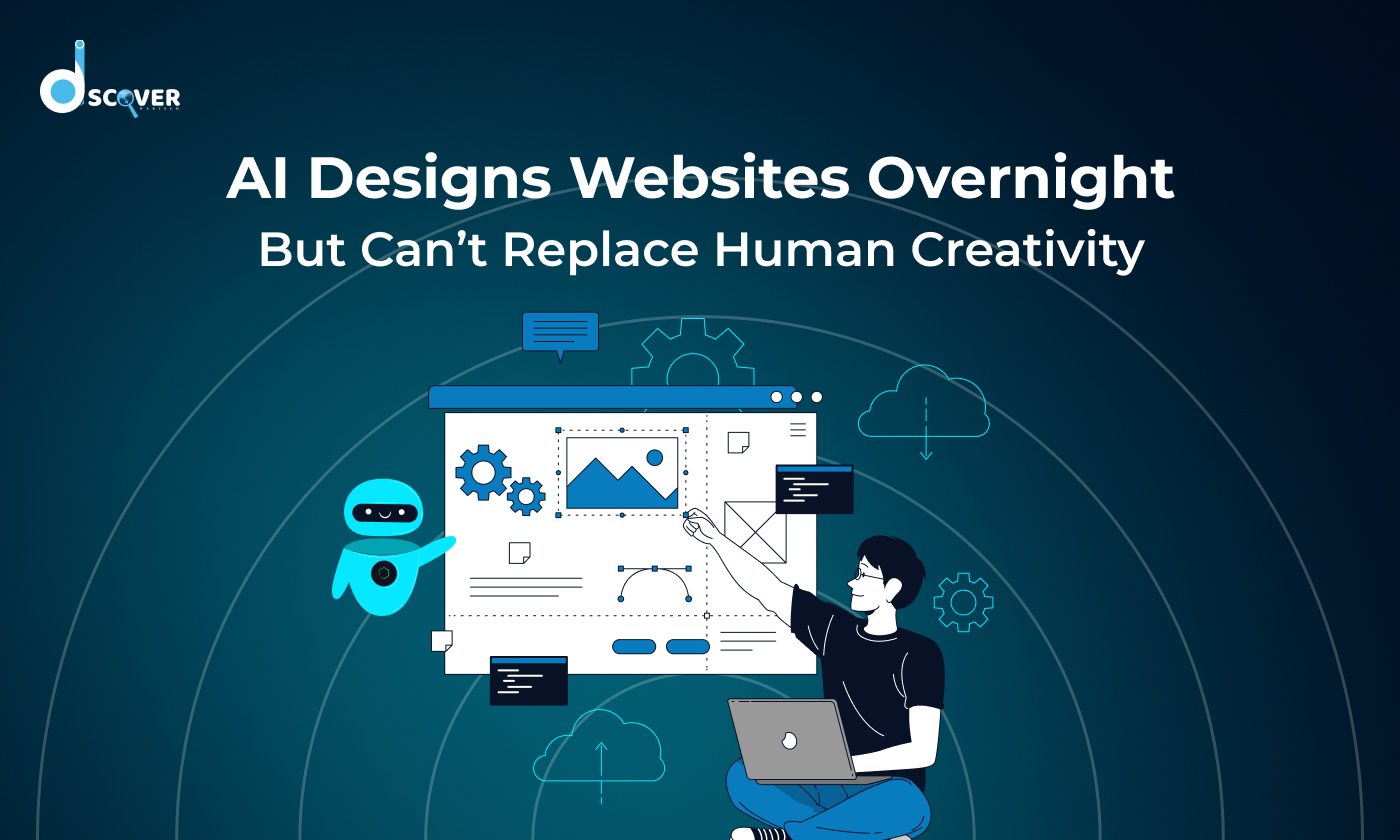
The smartest approach to modern web design is not choosing between AI and humans, but learning how to combine their strengths. AI is highly efficient at repetitive, time-consuming tasks, while human designers bring imagination, intuition, and problem-solving skills. Striking the right balance allows businesses to get the best of both worlds: fast, functional websites that are also creative, engaging, and unique.
This balance also prevents overdependence on technology, ensuring that websites don’t all start looking the same. By blending automation with originality, businesses can scale efficiently while still maintaining the uniqueness and personality that set them apart from competitors.
5.1 When to rely on AI for repetitive tasks
In modern web design, not every task requires human creativity. Many routine and repetitive processes can be handled more efficiently by AI, freeing up designers to focus on higher-level creative work. Using AI for these tasks helps speed up development and ensures consistency across the website.
AI shines when it comes to handling tasks that don’t require deep creative thinking. These include:
- Generating standard website layouts and templates
- Automating code writing and debugging
- Optimizing images for faster loading speeds
- Running A/B tests and analyzing performance data
- Suggesting design improvements based on user behavior
By letting AI take care of these time-consuming jobs, designers can focus their energy on the more strategic and creative aspects of a project.
5.2 Where human designers add irreplaceable value
While AI can automate processes, it cannot replace human imagination. Designers play a key role in shaping the overall vision, tone, and feel of a website. They understand subtle details like cultural context, emotional triggers, and user preferences that machines can’t interpret. Human creativity also ensures that branding stays consistent, experiences feel personal, and every project carries a unique identity. This irreplaceable human touch is what transforms a standard site into a powerful storytelling platform that builds long-term connections with its audience.
6. Future of Web Design: Collaboration Between AI and Humans
The future of web design is not about choosing between AI and human designers, but finding ways for both to work together seamlessly. As AI continues to advance, it will take on more technical and repetitive tasks, while humans focus on creativity, strategy, and emotional storytelling. This collaboration has the potential to create websites that are faster, smarter, and more engaging than ever before.
6.1 Blending machine efficiency with human creativity
AI can process vast amounts of data, suggest optimized layouts, and perform repetitive tasks quickly, but it cannot replicate intuition or imagination. Human designers complement this by adding unique visual concepts, crafting compelling narratives, and ensuring every website feels personal and aligned with the brand. Together, AI and humans can produce websites that are not only efficient but also memorable and emotionally engaging.
6.2 Predictions for the next era of web design
Looking ahead, web design will likely evolve into a fully collaborative process where AI handles optimization, analytics, and technical tasks, while humans focus on creative direction and user experience. Some key predictions include:
- More AI-assisted design platforms: Tools that help create websites faster while offering creative suggestions.
- Smarter personalization features: Websites that adapt to individual user preferences in real time.
- Increased accessibility for small businesses: AI tools allowing smaller brands to compete with larger enterprises.
- Enhanced efficiency and functionality: Faster updates, automated testing, and optimized layouts without sacrificing creativity.
- Focus on creativity and human touch: Designers will spend more time on storytelling, branding, and unique visual experiences.
The result will be websites that are faster to build, highly functional, and rich in creativity, offering users a seamless and meaningful experience.
7. Conclusion
AI is transforming the world of web design by making it faster, more efficient, and accessible to businesses of all sizes. From automating repetitive tasks to optimizing layouts and code, AI has proven to be a powerful tool for modern designers.
However, human creativity remains irreplaceable. Emotional storytelling, unique brand identity, and innovative problem-solving are qualities that AI cannot replicate. The most successful websites of the future will be those that combine AI’s efficiency with human imagination, resulting in digital experiences that are both functional and deeply engaging.
Embracing a collaborative approach allows businesses to stay ahead in a competitive digital landscape. By leveraging AI for efficiency and relying on human creativity for originality, companies can produce websites that not only meet technical standards but also resonate with their audience, strengthen their brand, and drive meaningful engagement.
Check out our latest blog on – “E-commerce Expert Blueprint: Master Online Store Development and Optimization”