


Artificial intelligence is transforming businesses at record speed.
But while companies focus on automation and innovation, attackers are quietly using the same technology to infiltrate systems, exploit weaknesses, and scale cybercrime faster than ever before.
If you run a SaaS platform, manage client data, operate an eCommerce store, or oversee cloud infrastructure, your environment is not just online — it is being continuously scanned by AI-powered systems searching for vulnerabilities.
Not manually.
Automatically.
And most business owners do not even realize it.
Table of Contents
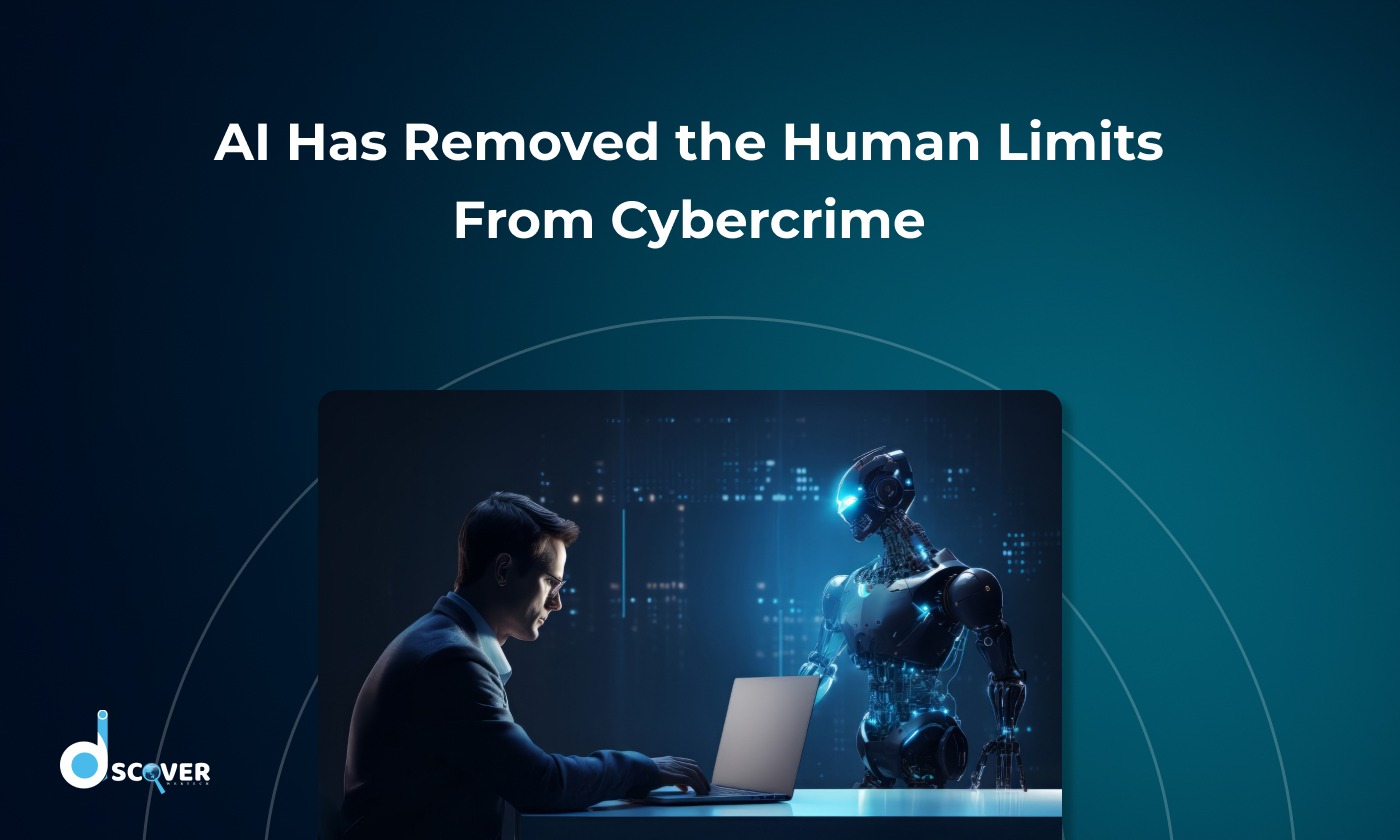
AI Has Removed the Human Limits From Cybercrime
There was a time when cyber attacks required patience and deep technical skill. Hackers had to manually test systems and craft targeted emails.
Today, AI-powered cyber attacks eliminate those limits.
Artificial intelligence can now scan thousands of applications in minutes, detect weak APIs, identify misconfigured cloud storage, generate personalized phishing emails, and deploy adaptive ransomware that learns from your defenses.
AI does not sleep. It does not hesitate. It does not miss patterns.
It learns from them.
That single shift has redefined cybersecurity in 2026.
Why Modern Phishing and Deepfake Attacks Are So Effective
Generative AI has changed phishing forever.
Emails are no longer poorly written scams. They mirror your brand voice. They reference real employee names. They pull contextual information from public sources. They look legitimate — because they are intelligently generated.
Voice cloning takes this further. With seconds of audio, attackers can replicate executive voices to authorize financial transfers. Deepfake technology can simulate internal video communication.
The result is simple: human intuition is no longer a reliable defense.
Businesses that still rely solely on employee awareness training without AI-driven monitoring are exposed to modern AI-generated cyber threats.
Ransomware Is Now Strategic and Predictive
Older ransomware attacked randomly.
AI-powered ransomware studies your infrastructure first. It maps your network. It identifies critical assets. It chooses the moment that will cause maximum disruption. It avoids detection by adapting behavior dynamically.
This is not chaos-driven cybercrime.
It is calculated digital warfare.
And companies using traditional firewalls and outdated endpoint protection are fighting a modern threat with legacy defenses.
If You Use Generative AI, Your Risk Has Expanded
Integrating AI into customer support, SaaS products, automation workflows, or internal systems creates innovation — but it also expands your attack surface.
Prompt injection attacks, AI data leakage, unauthorized API calls, and model manipulation are real cybersecurity risks today.
Cybersecurity for generative AI is no longer optional for forward-thinking companies. It requires specific safeguards, architecture reviews, and ongoing monitoring.
Ignoring this layer of risk does not reduce exposure. It increases it. One of the most common ways companies face AI data leakage is through the unmonitored use of prompts in creative workflows. As you scale and begin integrating Generative AI into your content marketing strategy, establishing an architecture review becomes essential to ensure proprietary brand data doesn’t end up in the public domain.
Small and Mid-Sized Businesses Are Now Prime Targets
A common belief is that only large enterprises are attacked.
AI has erased that myth.
Automated vulnerability scanning tools search for weakness, not company size. In fact, small and mid-sized businesses are often preferred targets because attackers assume security systems are less mature.
If your organization does not use AI-driven threat detection, continuous monitoring, and zero trust security architecture, you may already have blind spots.
Most breaches do not happen because of dramatic failures.
They happen because of unnoticed gaps.
AI is exceptionally good at finding those gaps.

The Only Real Defense: Intelligent, AI-Driven Cybersecurity
Fighting AI-powered threats requires AI-powered defense.
Modern cybersecurity must include predictive threat detection, behavioral monitoring, automated incident response, and continuous vulnerability assessments.
This is where experienced cybersecurity partners matter.
At Discover WebTech, we help founders, product owners, and enterprises assess their real exposure in the AI era. Not just surface-level audits — but strategic cybersecurity evaluations designed for modern infrastructure.
We focus on identifying silent vulnerabilities before attackers do.
Because prevention is cheaper than recovery.
And trust is harder to rebuild than it is to protect.
If you are unsure whether your current security systems are built for AI-powered threats, that uncertainty itself is worth examining.
Cybersecurity Is Now a Growth Decision
Investors evaluate cybersecurity posture during due diligence.
Enterprise clients demand proof of security maturity.
Customers expect their data to be protected by intelligent systems — not outdated tools.
Cybersecurity is no longer an IT line item. It is a growth strategy.
Companies that proactively implement AI-driven cybersecurity frameworks signal strength and stability. Companies that delay often learn through costly incidents.
The shift has already happened.
The question is whether your business has adapted.
Frequently Asked Questions
What are AI-powered cyber attacks?
AI-powered cyber attacks use artificial intelligence to automate hacking processes, generate realistic phishing messages, scale vulnerability scanning, and create adaptive malware.
How does AI increase cybersecurity risk?
AI increases risk by making attacks faster, more personalized, harder to detect, and easier to scale across thousands of targets simultaneously.
Can small businesses be targeted by AI-driven attacks?
Yes. Automated scanning tools search for weaknesses regardless of company size. Small and mid-sized businesses are frequently targeted due to weaker defenses.
What is AI-driven cybersecurity?
AI-driven cybersecurity uses machine learning and behavioral analytics to detect anomalies, predict vulnerabilities, and automate incident response in real time.
Is traditional cybersecurity still enough?
Traditional security tools alone are no longer sufficient against AI-generated threats. Businesses need predictive, AI-enhanced security frameworks.
The Final Question
Hackers are already using artificial intelligence to break into businesses.
Is your defense strategy evolving at the same speed?
If you want clarity on where your organization stands in this new cybersecurity landscape, Discover WebTech can help you evaluate your exposure and strengthen your defenses before an incident forces you to react.
Because in 2026, silence is not safety.
It is exposure.