


1. Introduction
The way people search for information is evolving. With the rise of voice-enabled technology, users are now speaking to their devices instead of typing. This shift is changing how we interact with content making search more conversational, immediate, and intent-driven.
Voice search is no longer a trend; it’s becoming a default behavior. Whether it’s checking the weather, asking for directions, or finding a nearby service, users rely on voice for quick, hands-free answers. This new behavior demands a fresh approach to SEO.
Unlike traditional search, voice queries are longer, more specific, and sound like natural conversation. People don’t say “best running shoes 2025” they ask, “What are the best running shoes for daily use in 2025?” That means businesses must optimize not just for keywords, but for real, spoken questions.
To stay visible, your content needs to mirror how people talk, not just how they type. This guide will walk you through why voice search matters and how to optimize your site to meet this fast-growing shift in user behavior.
1.1 Rise of Voice Assistants (Alexa, Siri, Google Assistant)
Voice assistants have become a regular part of daily life. From setting alarms and checking the weather to answering questions or playing music, tools like Alexa, Siri, and Google Assistant are helping users complete tasks more efficiently. These assistants are no longer limited to smartphones. They are found in smart speakers, smart TVs, and even in cars. As more households adopt these devices, voice search is becoming a natural way for people to find what they need without using a screen. The convenience and speed of voice interaction have made it a preferred choice for many users across different age groups.
1.2 Why Voice Search is a Game-Changer for Marketers
Voice search brings a more natural and conversational way of asking questions. People no longer use short or broken keyword phrases. Instead, they ask full questions like they would in a conversation. This means marketers need to focus on answering real questions in a clear and simple way. Voice search often reveals stronger user intent, making it easier to connect with potential customers at the right moment. To stay ahead, marketers must adapt their SEO and content strategies to match the new voice-first search experience.
2. What is Voice Search Marketing?
Voice search marketing is changing how brands connect with their audience in the age of voice-enabled devices. As more users rely on speech to find information, businesses must adapt their digital presence to appear in results delivered by virtual assistants like Alexa, Siri, or Google Assistant.
2.1 Definition and Scope
Voice search marketing refers to the practice of optimizing your content and online assets so that they can be easily discovered through voice-based searches. It is a branch of SEO that focuses on how people speak, rather than type. The strategy goes beyond keyword optimization and includes creating conversational content, answering specific user questions, improving mobile performance, optimizing for local search, and using structured data to help search engines understand your content.
The scope of voice search marketing is broad. It applies to businesses of all sizes and across all industries. Whether you run a local restaurant, an e-commerce store, or a service-based website, aligning your content with how people naturally speak increases your chances of being featured in voice search results.
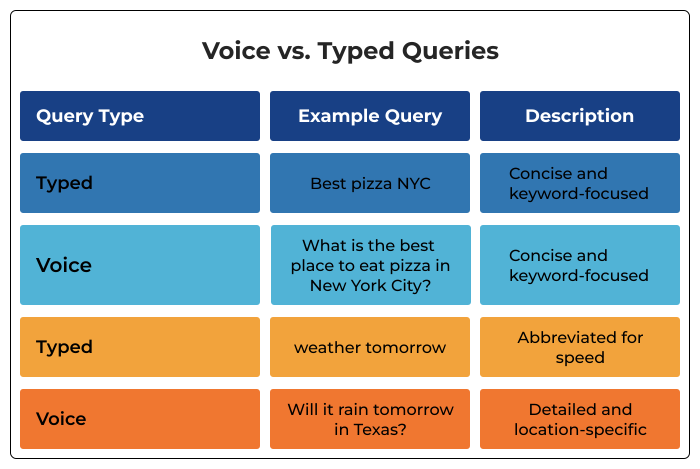
2.2 Examples of Voice Queries vs Typed Queries
Voice queries tend to be longer and more conversational than typed ones. Instead of using short, keyword-focused phrases, users ask complete questions when using voice.
For example:
- Typed query: “best pizza NYC”
- Voice query: “What is the best place to eat pizza in New York City?”
- Typed query: “weather tomorrow”
- Voice query: “Will it rain tomorrow in Texas?”
These examples highlight the shift in how users search, which requires marketers to focus on more natural, question-based content that matches voice search behavior.
3. Why Voice Search Matters
Voice search is becoming an essential part of how people access information. As technology advances and digital habits evolve, voice-based interaction is no longer a trend. It is a core behavior shaping the future of online search. For marketers, understanding the value of voice search is key to staying visible and relevant in a fast-changing digital landscape.
3.1 Increasing Adoption of Smart Devices
The use of smart devices like smartphones, smart speakers, smart TVs, and wearable gadgets has seen rapid growth in recent years. Millions of homes now use virtual assistants like Alexa, Siri, and Google Assistant to complete everyday tasks. From checking the weather to ordering groceries, users are growing more comfortable talking to their devices.
This rise in voice-enabled technology means that people are engaging with brands and services in new ways. Businesses that optimize their content for voice search can reach users exactly where and when they are asking for help. As smart device usage becomes more common across all age groups, voice search is emerging as a primary gateway to online discovery.
3.2 Higher Intent in Voice Queries
Voice queries often reflect clearer and stronger intent than text searches. When people use voice, they are usually looking for quick answers or ready to take action. For example, someone saying “Where can I buy running shoes near me right now?” shows immediate buying intent.
This high level of intent makes voice search a powerful opportunity for marketers. It allows them to deliver precise, helpful content at the right moment. Whether the goal is to increase visibility, drive local traffic, or improve conversions, understanding voice intent can lead to more effective and timely customer engagement.
4. Text Search vs Voice Search: Key Differences
As voice technology becomes more common, the way people interact with search engines is changing. Understanding the differences between text and voice search is important for creating content that aligns with modern user behavior.
4.1 Conversational Tone and Natural Language
When people use voice search, they tend to speak in a natural, conversational manner. Instead of saying “best laptop 2025,” they might ask, “What is the best laptop to buy for students in 2025?” This shift in language means content should sound more human and less robotic. It should feel like it’s answering a real person’s question.
- Use simple, everyday language that mimics how people talk.
- Focus on answering specific questions clearly and directly.
4.2 Longer, More Specific Queries
Voice searches are often longer and more detailed than typed ones. This is because speaking is easier and faster than typing. For example, a typed query might be “restaurants near me,” while a voice query could be “What are some good vegetarian restaurants open right now near my location?” These detailed queries reveal clear intent and specific needs, giving businesses a better chance to serve useful, relevant content that ranks well in voice search results.
5. Voice Search Optimization Strategies
Voice search requires a shift in how content is written and structured to match how people speak when asking questions. It’s not just about ranking anymore it’s about being the first and only answer voice assistants read aloud. That means optimizing your content to deliver fast, clear, and authoritative answers using the following strategies.
5.1 Use Long-Tail & Conversational Keywords
Focus on longer, natural-sounding keyword phrases that reflect how users speak. These are often question-based and more specific, helping you match user intent more effectively. Instead of targeting “SEO tips,” aim for “What are the best SEO tips for small businesses in 2025?”
Tactics:
- Identify questions your audience is already asking using tools like Answer the Public or Google’s “People Also Ask.”
- Use natural phrases like “how do I,” “where can I,” or “what is the best way to…” to mirror voice query structures.
- Integrate these keywords into page titles, H2s, meta descriptions, and throughout body content.
5.2 Optimize for Featured Snippets
Featured snippets also known as “position zero” are often the source of answers in voice search. To win them, your content must be structured in a way that’s easy for search engines to pull from and quick for voice assistants to read aloud.
Tactics:
- Answer the target question in the first sentence below the header.
- Use ordered lists, unordered bullet points, or tables to structure answers when appropriate.
- Keep your snippet answers between 40–60 words to match the ideal length for voice output.
- Add structured data like FAQPage or HowTo schema to help search engines understand content purpose and hierarchy.
6. Leverage Local SEO for Voice Search
Voice search is often used for local intent. People rely on voice assistants to find nearby restaurants, stores, or services while they are driving, walking, or multitasking. This makes local SEO an essential part of voice search optimization, especially for businesses that serve specific geographic areas.
6.1 Optimize for “Near Me” Queries
Many voice searches include terms like “near me” or “closest to me.” For example, a user might say, “Where’s the nearest coffee shop open now?” To rank for these queries, make sure your business is listed on Google Business Profile with complete and accurate information. Include your business hours, contact details, and categories. Collecting customer reviews also helps improve your chances of showing up in local voice results.
6.2 Add Location-Based Keywords
Use specific location references throughout your website content. Instead of just saying “best dentist,” say “best dentist in Austin, Texas.” Include these keywords in page titles, meta descriptions, service pages, and blog posts. If your business operates in multiple cities, create separate pages for each location. This helps voice assistants understand where you are based and improves your visibility in geographically targeted searches.
7. Best Content Types for Voice Search
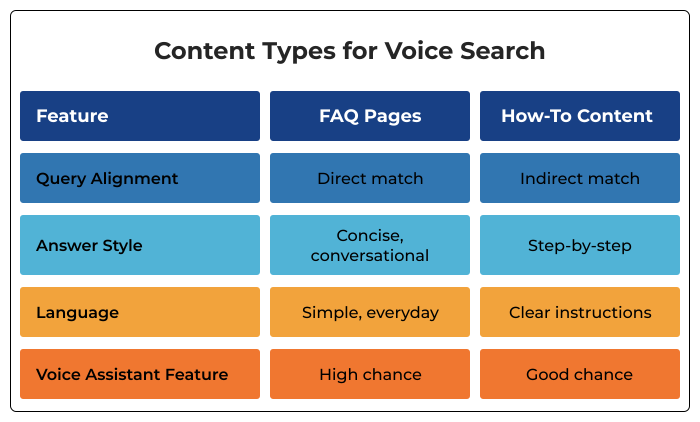
Creating voice-search-friendly content isn’t just about using the right keywords it’s also about using the right content formats. Two of the most effective types for voice search are FAQ pages and how-to content.
7.1 FAQ Pages
Frequently Asked Questions (FAQ) pages are one of the most effective content types for voice search. Voice queries are often phrased as questions, such as “How do I apply for a business loan?” or “What’s the best time to water plants?” By creating an FAQ section that answers common questions in your niche, you align directly with the structure of voice queries.
- Each question should be followed by a concise, conversational answer to improve voice compatibility.
- Use simple, everyday language and aim to keep answers short ideally between 30 to 50 words.
- This format increases your chances of being featured in a voice assistant’s spoken response or appearing in a featured snippet.
7.2 How-To Content
Step-by-step guides, tutorials, and instructional posts are also ideal for voice search. People frequently use voice assistants to learn how to do something, such as “How to tie a tie” or “How to bake a cake without eggs.” Structuring your content in a logical sequence with numbered steps, clear subheadings, and brief instructions helps voice assistants deliver that content accurately. Use transition phrases like “first,” “next,” and “finally” to enhance clarity. This content type is not only great for voice queries but also increases engagement and time on page.
8. Technical SEO Considerations
Voice search optimization isn’t just about keywords and content it also relies heavily on strong technical SEO. Without a solid technical foundation, your content may not be indexed or served effectively by voice assistants.
8.1 Schema Markup for Rich Results
Implementing schema markup (structured data) helps search engines understand your content better and enhances your chances of appearing in featured snippets and voice search results. For instance, marking up FAQs, recipes, how-to instructions, business details, and product information can help voice assistants extract relevant answers more accurately. Use formats like JSON-LD to add schema directly to your HTML. Tools like Google’s Structured Data Markup Helper can simplify the process.
8.2 Improve Core Web Vitals
Core Web Vitals are performance metrics that measure user experience, including loading speed, interactivity, and visual stability. Since voice searches are often done on mobile devices, a fast and responsive site is critical. Focus on reducing Largest Contentful Paint (LCP) times, minimizing layout shifts (CLS), and ensuring quick interaction response (FID). Compress images, use efficient coding practices, and leverage browser caching to improve these metrics.
9. Common Mistakes to Avoid
As voice search continues to reshape how users interact with content, avoiding common pitfalls becomes crucial for success. Many websites fail to optimize effectively simply because they overlook user intent and mobile usability.
9. 1 Using robotic or keyword-stuffed content
One of the biggest mistakes is creating content that sounds robotic or is overloaded with keywords. Voice search thrives on natural, conversational language. When content is stuffed with awkward phrases just to rank for specific terms, it turns off both users and search engines. Instead, aim to write in a tone that mimics real human conversation, especially since voice queries are often phrased as questions or full sentences.
- Avoid repeating keywords unnaturally within a paragraph.
- Use contractions and question-based phrases for a human-like tone.
9. 2 Poor mobile experience
Voice searches are predominantly done on mobile devices, so a poor mobile experience can instantly drive users away. If your site loads slowly, displays improperly, or is difficult to navigate on smartphones or tablets, it will not only hurt your rankings but also your user engagement. Make sure your website is mobile-responsive, fast-loading, and easy to interact with using voice commands or touch gestures.
Conclusion
Voice search isn’t the future, it’s already here, changing how users interact with search engines and how businesses must approach SEO. With the growing popularity of smart assistants and hands-free searches, optimizing for voice is no longer optional. It’s essential to recognize that voice search requires a more natural, question-based, and localized content approach. Instead of treating it as a separate strategy, blend voice search seamlessly into your broader SEO plan. Focus on conversational keywords, mobile-friendliness, fast-loading pages, and user intent-driven content. Incorporate structured data, create helpful content formats like FAQs and how-to guides, and ensure your site performs well on both desktop and mobile. Voice search optimization is not about completely reinventing your SEO it’s about adapting to how users search today. Staying ahead in this voice-first world means building for convenience, relevance, and clarity across all digital touchpoints.
Check out our latest blog on “AI Website Builder vs. Traditional Website Builder: Which Should You Choose?”